
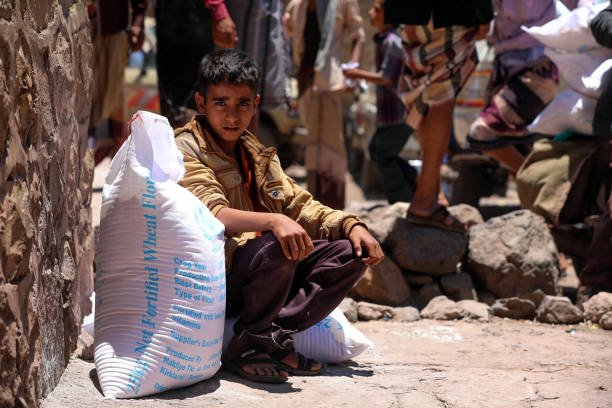
Renewed fighting in Yemen has sharply worsened access to food in areas monitored by the World Food Programme, which says 74% of households in accessible government-held areas cannot meet their basic food needs.
The figure comes from WFP’s recent monitoring. It describes households in the areas the agency could reach; it is not a finding that 74% of all families across Yemen face the same conditions. WFP says the share is the highest it has recorded in those areas this year, after deterioration over just a few weeks. (wfpusa.org)
The worsening hunger follows an escalation in fighting along Yemen’s western coast. More than 149,000 people have been forced from their homes, according to displacement figures cited by WFP from the International Organization for Migration. Some families have arrived at displacement sites after travelling for days with little food or water. (wfpusa.org, miragenews.com)
Food prices rise as families flee
Displacement has left many families without their usual income, food supplies, or access to markets. Fighting has also disrupted trade routes at a time when Yemen imports about 90% of its food. That reliance makes interruptions to shipping and local distribution particularly hard for households already struggling to afford daily meals. (wfpusa.org)
In parts of Taiz, wheat flour prices have risen by 10% in two weeks, WFP said. Traders there estimate their wheat stocks would cover only about two months of demand, while disruption to vegetable oil supplies is adding pressure. These are local findings and should not be read as a single price change across the country. (wfpusa.org)
WFP official Matthew Hollingworth told journalists that families were skipping meals and eating a narrower range of foods. For people who have fled, the problem may be even more immediate: some displacement sites have limited access to functioning markets, meaning cash assistance alone cannot always secure food. (miragenews.com, wfpusa.org)
Aid cannot reach some frontline communities
WFP says it has provided assistance to more than 70,000 people in two major displacement areas, Taiz and Lahj. It is positioning supplies to respond to further movements of people and says it could expand emergency assistance to as many as 1.5 million people if needed. That figure is its potential response capacity, rather than a count of people already reached. (wfpusa.org)
Access remains a serious obstacle. Conflict has cut off routes to parts of Taiz and Hodeidah, preventing WFP and its partners from reaching approximately 350,000 people they had previously been able to assist. Insecurity and higher transport costs are also making it harder to move food towards frontline areas. (wfpusa.org)
The agency is drawing on resources originally set aside for food distributions in November to meet immediate needs. It warns that, without further funding, vulnerable families could begin facing gaps in assistance within the next month. This pressure comes on top of WFP’s regular support for around 2.4 million people facing severe hunger in government-held areas. (wfpusa.org)
WFP seeks funds for the emergency response
In its latest Yemen update, WFP says it needs $109 million to provide emergency food and nutrition assistance for up to 1.5 million people affected by the escalation. It separately seeks $158 million to maintain regular programmes, including food, cash, nutrition support, and school meals for 2.4 million people through March 2027. The two requests cover different parts of its response. (wfpusa.org)
Yemen’s food crisis was severe before the latest fighting. WFP estimates that 18.3 million people nationwide face acute food insecurity and that 2.2 million children under five are acutely malnourished. The new 74% household finding shows how quickly conditions have worsened in the accessible areas it monitored; it should not be substituted for those separate nationwide estimates. (wfpusa.org)
In comments reported by Reuters, Hollingworth also warned that instability near the Bab al-Mandab Strait could disrupt trade and put further pressure on food prices beyond Yemen. That wider effect remains a risk. For families already displaced, the immediate questions are whether food can reach them safely and whether the response can be funded as needs grow. (reuters.com)