
For most people living with HIV, modern treatment is highly effective. Antiretroviral medicines can suppress the virus to undetectable levels, protect the immune system and allow people to live long, healthy lives.
But for a small number of patients, HIV develops resistance to several medicines. When that happens, finding a treatment capable of controlling the virus can become increasingly difficult.
A new option is now routinely available in England.
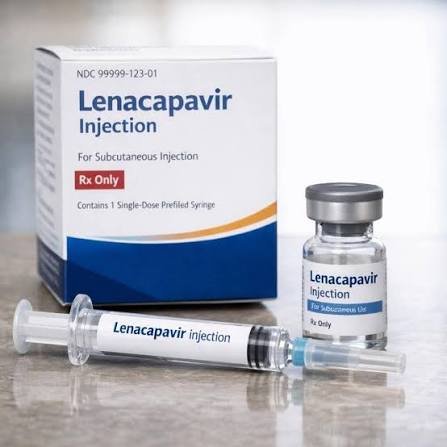
NHS England has approved lenacapavir for eligible adults with multidrug-resistant HIV-1, giving specialists another option for patients whose virus can no longer be adequately treated with several existing medicines.
How lenacapavir works
Lenacapavir is the first medicine in a class of HIV drugs known as capsid inhibitors.
The capsid is the protein shell surrounding HIV’s genetic material. Lenacapavir interferes with this structure at different stages of the virus’s life cycle, disrupting its ability to reproduce.
That mechanism is important because it is different from those used by existing classes of HIV medicines. It means lenacapavir can form part of a treatment combination for some patients whose virus has developed resistance to several other drugs.
The medicine is also long acting. Following an initial treatment phase involving tablets and injections, lenacapavir injections are administered every six months.
However, the twice-yearly injection does not necessarily replace a patient’s entire HIV treatment regimen. For multidrug-resistant HIV, lenacapavir is used alongside other appropriate antiretroviral medicines selected by specialists.
Who is eligible?
Lenacapavir is not intended to replace standard HIV treatment for most patients.
The NHS policy covers adults with multidrug-resistant HIV-1 who meet specific clinical criteria. These can include people who have limited treatment options because their virus has developed resistance to several antiretroviral medicines.
The development is particularly important for some people who have lived with HIV for many years and have previously received several different treatments.
Anyone concerned that their HIV medication is no longer working should speak to their specialist HIV team. Drug resistance requires clinical assessment and testing, and patients should never stop or change prescribed HIV medication without medical advice.
For people who meet the criteria, however, lenacapavir provides another option where treatment choices may previously have been severely limited.
Treatment and prevention are different
Lenacapavir is also receiving international attention as a method of preventing HIV, but that use should be distinguished from the NHS decision in England.
The NHS policy concerns treatment for people already living with multidrug-resistant HIV.
In HIV prevention, lenacapavir can be used as pre-exposure prophylaxis, or PrEP, for people who do not have HIV but are at risk of acquiring it.
The prevention potential is particularly significant because injections are required only twice a year. This could provide an alternative for people who find taking preventive tablets regularly difficult.
Clinical trials have produced very strong results. In the PURPOSE 1 study involving cisgender women, no HIV infections were recorded among participants receiving twice-yearly lenacapavir. PURPOSE 2 also showed very high effectiveness among a broader population.
The results helped establish lenacapavir as one of the most important recent developments in HIV prevention.
What it could mean for Africa
The prevention side of the story has particular importance for Africa, which continues to carry the world’s largest HIV burden.
Countries including Kenya and South Africa have been preparing for or introducing long-acting lenacapavir as part of their HIV prevention programmes.
For health systems, the attraction is clear. A person receiving protection through an injection every six months does not have to remember a daily PrEP tablet.
But scientific success does not automatically guarantee widespread access.
Cost, medicine supplies, healthcare infrastructure, trained staff and the ability to reach communities at greatest risk will determine how widely the benefits are felt.
If those challenges can be addressed, long-acting prevention could become an important additional tool in efforts to reduce new HIV infections across the continent.
What the NHS decision means
The significance of England’s decision should be kept in perspective.
Lenacapavir does not transform treatment for everyone living with HIV, because existing therapies already work extremely well for most patients.
Its immediate importance is for a much smaller and clinically complex group: people whose HIV has become resistant to several medicines and who may have few remaining treatment choices.
For them, another effective option can be critical.
At the same time, the wider development of lenacapavir for HIV prevention shows how one medicine could play two very different roles in the global response to HIV-helping specialists treat difficult drug-resistant infections while also offering long-lasting protection to people at risk of acquiring the virus.
Trivane News-Facts first. Not frenzy.