
While Sudan represents the world’s largest humanitarian crisis, eastern Democratic Republic of the Congo (DR Congo) is home to one of the world’s most complex and enduring conflicts.
Violence has persisted for more than three decades, evolving through successive rebellions, regional wars and the emergence of dozens of armed groups. Despite repeated peace agreements, millions of people continue to live under the constant threat of displacement, armed attacks and humanitarian hardship.
Unlike many modern conflicts, the crisis in eastern DR Congo is driven by a combination of historical grievances, ethnic tensions, weak state institutions, regional rivalries and competition over some of the world’s most valuable mineral resources.
Understanding the conflict requires looking beyond individual battles to the wider political and economic forces that continue to fuel instability.
A CONFLICT ROOTED IN HISTORY
The roots of today’s violence stretch back to the aftermath of the 1994 Rwandan genocide, when hundreds of thousands of refugees, including members of the defeated Hutu militia responsible for the genocide, crossed into what was then Zaire.
The presence of armed groups near Rwanda’s border created long-term security concerns for Kigali and contributed to a series of regional wars involving multiple neighbouring countries.
Although the formal wars ended years ago, eastern DR Congo has never fully stabilised.
Weak state authority, difficult terrain and porous borders have allowed dozens of armed groups to remain active across the provinces of North Kivu, South Kivu and Ituri.
Today, more than one hundred armed groups operate in eastern DR Congo, although only a small number possess the military capability to influence events on a regional scale.
THE RETURN OF M23
The most significant development in recent years has been the resurgence of the March 23 Movement (M23).
Originally formed by former Congolese soldiers, M23 briefly captured the city of Goma in 2012 before being defeated by the Congolese army and regional forces.
The group re-emerged in late 2021 and rapidly expanded its operations.
On 27 January 2025, M23 seized Goma, the capital of North Kivu Province and eastern Congo’s largest city.
Less than three weeks later, on 16 February 2025, M23 entered Bukavu, the capital of South Kivu, significantly expanding its territorial control.
These developments marked one of the most dramatic escalations in the conflict for more than a decade.
The Congolese government has consistently accused neighbouring Rwanda of providing military support to M23.
Successive reports by the United Nations Group of Experts have concluded that Rwanda has supported the group through military assistance, equipment and operational coordination.
Rwanda has repeatedly rejected allegations that it directs or controls M23, while maintaining that it faces legitimate security threats from armed groups operating inside eastern DR Congo.
The dispute has become one of the central diplomatic tensions in the Great Lakes region.
THE HUMANITARIAN IMPACT
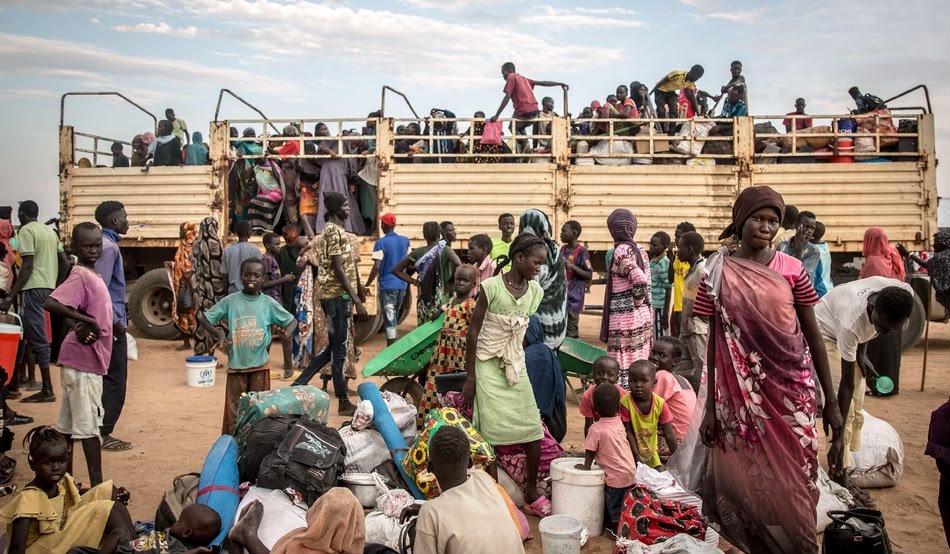
For civilians, the consequences have been devastating.
According to humanitarian agencies, approximately 7.8 million people remain internally displaced in DR Congo, making it Africa’s largest internal displacement crisis.
Many families have been forced to flee repeatedly as frontlines shift.
Displacement camps around Goma, Bukavu and other towns have struggled with overcrowding, inadequate sanitation and limited access to healthcare.
Women and children have borne a disproportionate share of the suffering.
The United Nations has repeatedly documented widespread sexual violence committed by multiple armed groups.
Children continue to face recruitment by armed organisations despite international efforts to end the practice.
Schools have closed across many conflict-affected communities, depriving hundreds of thousands of children of education.
Healthcare services have also been severely disrupted by insecurity and repeated attacks on medical facilities.
THE ROLE OF NATURAL RESOURCES
Eastern DR Congo contains some of the world’s richest deposits of strategic minerals.
These include:
* Coltan
* Cobalt
* Gold
* Cassiterite
* Tin
* Tungsten
These minerals are essential for modern technologies, including smartphones, computers, electric vehicle batteries and renewable energy infrastructure.
Rather than becoming a source of widespread prosperity, mineral wealth has often become a driver of conflict.
Numerous armed groups finance their operations by taxing mining communities, controlling transport routes or engaging in illicit mineral trade.
Competition over these resources has created powerful financial incentives for violence.
The conflict therefore cannot be understood solely through military or ethnic factors.
It is also an economic conflict in which access to valuable natural resources remains central.
PEACE EFFORTS
Diplomatic efforts intensified during 2025 and 2026.
Regional leaders, together with international partners, supported negotiations aimed at reducing tensions between the Congolese government and M23.
The Doha process, facilitated by Qatar, has provided a platform for direct dialogue between the parties.
At the same time, regional security discussions involving the United States and African governments have sought to improve confidence-building measures and reduce the risk of wider regional confrontation.
These initiatives have contributed to periods of reduced fighting.
However, ceasefires have remained fragile.
Localised clashes continue in parts of eastern DR Congo, demonstrating how difficult it remains to transform diplomatic agreements into lasting security on the ground.
WHY THE CONFLICT CONTINUES
Several factors continue to prolong the crisis.
State institutions remain relatively weak in many eastern provinces.
Dozens of armed groups continue operating simultaneously, making comprehensive peace agreements difficult to implement.
Regional mistrust between neighbouring countries complicates security cooperation.
Illegal mining networks continue generating significant revenue for armed actors.
Communities that have experienced decades of violence often lack confidence in state institutions responsible for providing security and justice.
Taken together, these challenges create an environment in which conflict can quickly re-emerge even after temporary ceasefires.
WHAT WOULD LASTING PEACE REQUIRE?
Most analysts agree that no single agreement will resolve eastern DR Congo’s security crisis.
Instead, progress is likely to depend on several complementary measures.
The Congolese government would need to strengthen governance and public services in conflict-affected provinces.
Regional governments would need to build greater confidence and improve security cooperation while addressing mutual security concerns.
Efforts to regulate mineral supply chains would need to reduce opportunities for armed groups to finance their activities.
International partners would need to continue supporting humanitarian operations alongside longer-term development initiatives.
Most importantly, local communities would need to play a greater role in peacebuilding, reconciliation and post-conflict reconstruction.
Without stronger institutions and greater public trust, military successes alone are unlikely to deliver lasting peace.
LOOKING AHEAD
The conflict in eastern DR Congo demonstrates that modern wars are rarely driven by a single cause.
Historical grievances, regional politics, economic interests and weak institutions have combined to create one of Africa’s most persistent security crises.
Despite ongoing diplomatic efforts, millions of Congolese civilians continue to bear the greatest burden of a conflict that has lasted for generations.
The search for peace therefore remains as much a challenge of governance and regional cooperation as it is of military security.