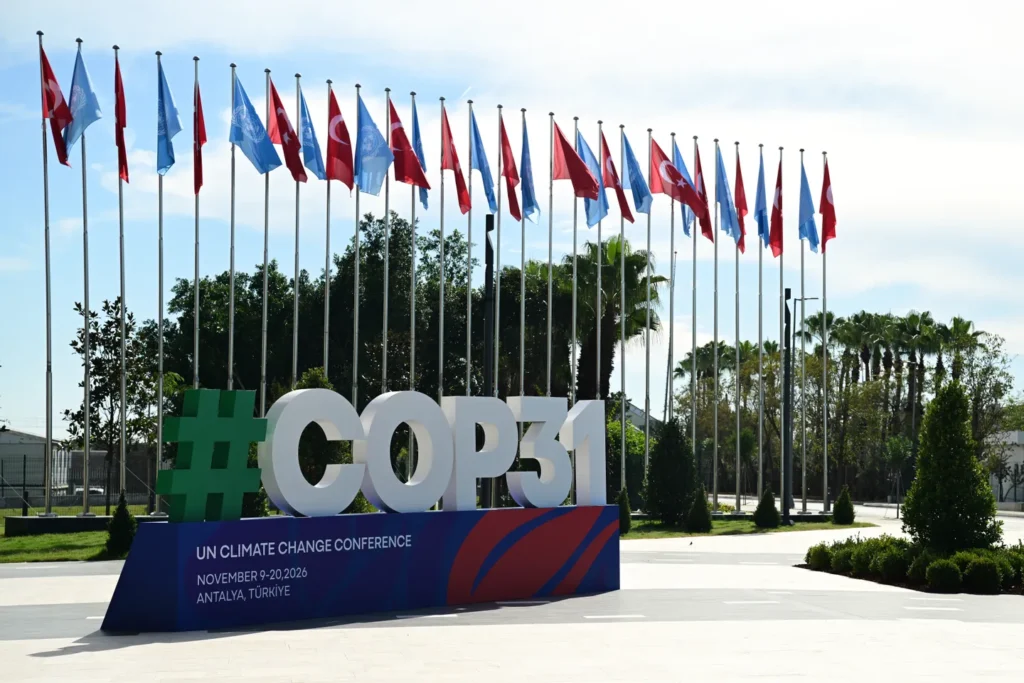
The 31st United Nations Climate Change Conference (COP31) in Antalya, Türkiye, concluded on Sunday, November 22, without countries reaching consensus on its main political agreement, known as the Antalya Pact.
The negotiations continued beyond the scheduled closing date as participating countries struggled to reconcile differences over fossil fuels, climate finance and the pace of the global energy transition.
Disagreement over fossil fuels
One of the major sticking points was the absence of explicit language on transitioning away from fossil fuels in the proposed agreement.
The European Union, the United Kingdom and several other countries objected to the draft, arguing that an agreement that failed to address oil, gas and coal would not adequately respond to the climate crisis.
Countries remain divided over how directly the conference should address the future of fossil fuel production and consumption, particularly given the economic dependence of some nations on these resources.
According to “Reuters” disagreements over fossil fuels and climate finance prevented consensus on the proposed outcome.

Climate finance remains a major concern
Developing countries also raised concerns about the availability of funding to address the effects of climate change.
For many vulnerable nations, adaptation finance is essential for strengthening infrastructure, protecting communities and responding to increasingly severe environmental events.
However, questions remained over the clarity and implementation of proposed financial commitments, including how increased funding would be measured and delivered.
The failure to agree on the Antalya Pact did not mean that every negotiation at the summit failed. The UK government confirmed that progress was made on other negotiating areas, including climate finance and just transition, while voluntary commitments also emerged from the conference.
What happens next?
The failure to secure agreement on the main political outcome represents a setback for international climate diplomacy, particularly as countries face growing pressure to accelerate emissions reductions and strengthen climate resilience.
The next climate conference, COP32, is scheduled to take place in Ethiopia in November 2027.