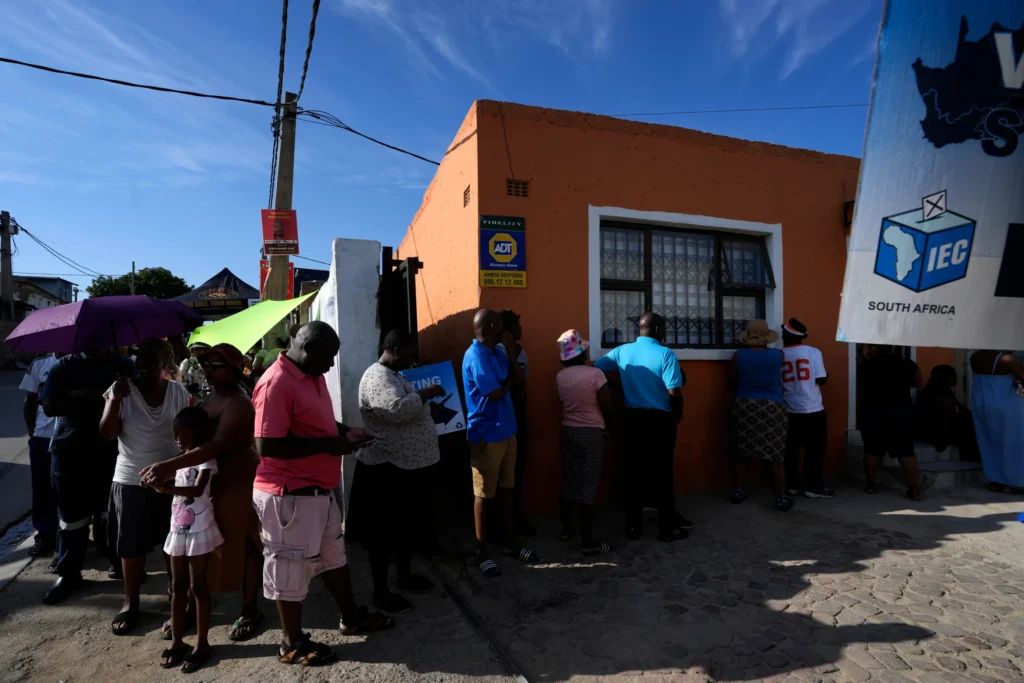
South Africans are heading to the polls on Wednesday, November 4, 2026, to elect representatives to municipal councils across the country in a contest that could further weaken the African National Congress (ANC).
The elections cover all 257 municipalities, including eight metropolitan municipalities, 44 district municipalities and 205 local municipalities. According to the Electoral Commission, 136,790 candidates were certified to contest the elections.
The vote comes two years after the ANC lost its parliamentary majority in the 2024 general election, forcing it to form a national government of unity with other political parties.
The party is now facing another test of its support at local level, where public frustration over poor municipal services has become a major campaign issue.

Service delivery concerns put ANC under pressure
Water shortages, electricity disruptions, deteriorating infrastructure and concerns about municipal administration are among the issues shaping the election.
Johannesburg is one of the major battlegrounds. The city has experienced repeated leadership changes, fragile coalition arrangements and persistent service delivery challenges.
A report by the “Associated Press” on election day identified Johannesburg as a key contest, with public dissatisfaction over water and electricity failures adding to pressure on the parties seeking control of the city.
A “Guardian report published on Wednesday” said opinion polls suggested the party could fall below one-third of the vote, reflecting the scale of the challenge it faces.
Opposition parties seek to expand their influence
The Democratic Alliance (DA) is seeking to strengthen its position in major urban centres, while other opposition parties are hoping to benefit from dissatisfaction with the governing party.
The elections also mark the first local government contest for the uMkhonto weSizwe (MK) Party, led by former president Jacob Zuma. The party made a strong showing in the 2024 general election, particularly in KwaZulu-Natal.
The Guardian reported that the MK Party was polling strongly in Durban’s eThekwini metropolitan area, where its growing support could further challenge the ANC’s position.
The results could also produce fragmented councils, making coalition negotiations necessary in municipalities where no party secures a majority. Such arrangements have previously been marked by political disagreements and changes in municipal leadership.
What the election could mean for South Africa
Although the vote determines who will govern municipalities and oversee local services, its outcome could also signal the direction of South African politics ahead of the next national election.
A poor result for the ANC could intensify pressure on the party to rebuild public confidence, while gains by opposition parties could strengthen their influence in local and national political negotiations.
The Electoral Commission has confirmed November 4 as election day, with voters choosing councillors and political parties to represent them in their municipalities. The results are expected to provide a clearer picture of the balance of political power across the country.