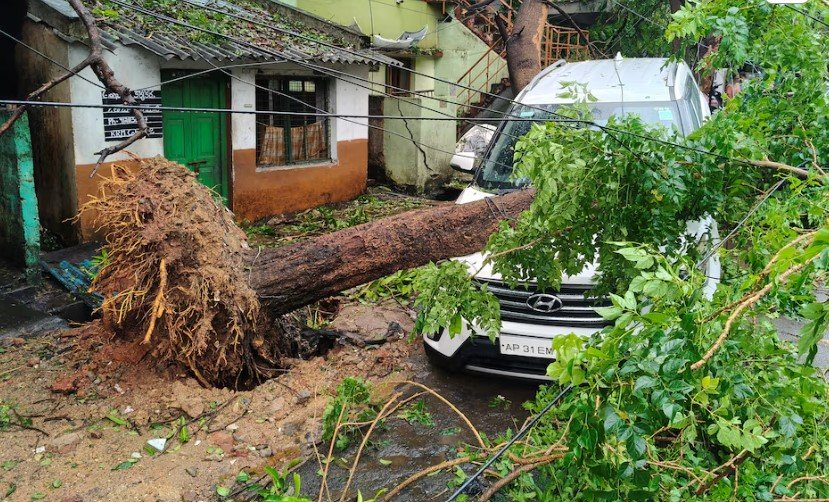
Cyclone Arnab struck India’s eastern coast on Wednesday, 28 October, after authorities evacuated more than 180,000 people from vulnerable areas in Andhra Pradesh and neighbouring Odisha.
The storm made landfall along the Andhra Pradesh coast between Bapatla and Visakhapatnam with sustained winds of 125-135 kilometres per hour and gusts reaching 150 kilometres per hour, according to the India Meteorological Department
At least three people were killed in Andhra Pradesh, according to National Disaster Response Force Inspector General Narendra Singh Bundela Two deaths were caused by a falling tree and electrocution, officials said Thirty-one houses were damaged, and around 57,000 people were moved to relief camps in the state.
Emergency Evacuations Before Landfall
The evacuations were intended to move residents away from areas exposed to flooding, storm surges and destructive winds.
More than 180,000 people were evacuated across Andhra Pradesh and Odisha ahead of the cyclone’s arrival Some schools were closed, and train and flight services were cancelled as authorities prepared for the storm.
The India Meteorological Department warned of a storm surge of 1 to 1.5 metres above normal tides, posing a threat to low-lying coastal areas. Fishermen were advised to remain ashore.

Infrastructure and Communities Face Disruption
The cyclone uprooted trees and electricity poles, damaged homes and interrupted power supplies. Andhra Pradesh Chief Minister N. Chandrababu Naidu said in a letter to federal Home Minister Amit Shah that at least 180 houses were destroyed, 220 trees brought down and power supply disrupted in several areas
Operations at three Andhra Pradesh airports were suspended, India’s civil aviation ministry said
Television images showed trees fallen on highways as workers in rain gear cleared roads of branches and leaves. Residents in Kakinada district described extensive damage.
“Trees have fallen, houses have been damaged, and all our belongings, including our books, have been destroyed,” said Nagi, a Kakinada resident who did not give a last name
Storm Weakens as It Moves Inland
The cyclone weakened from a very severe cyclonic storm to a severe cyclonic storm after landfall, and was expected to weaken further into a deep depression by evening as it moved towards Chhattisgarh
Heavy to extremely heavy rainfall continued to affect southern Odisha, prompting the state government to evacuate more than 30,000 people and mobilise emergency personnel Odisha Disaster Management Minister Suresh Pujari said the next 24 hours would be critical.
While Andhra Pradesh bore the brunt of the storm, preliminary reports indicated no serious impact in Odisha
What Happens Next?
Authorities will need to assess the full extent of damage, restore essential services and determine whether displaced residents can safely return home.
The India Meteorological Department has warned of continued heavy rainfall in southern Odisha and neighbouring states as the weakened system moves inland. Flooding, damaged power infrastructure and blocked roads can create additional risks after a cyclone moves inland.