
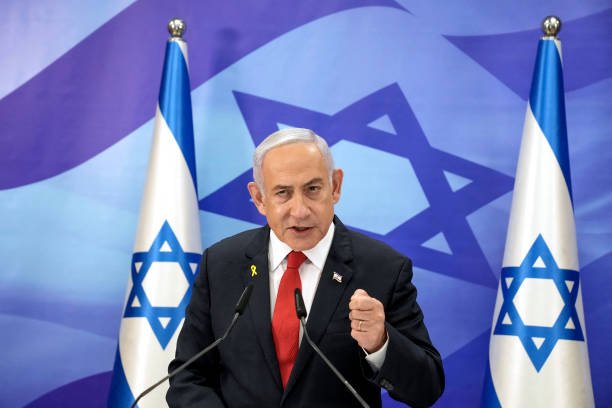
Israeli Prime Minister Benjamin Netanyahu has warned that Israel’s enemies could attempt attacks before the country’s 27 October parliamentary election, prompting demands from opposition leaders for more information about the intelligence behind his remarks.
Netanyahu delivered the warning during a visit to Tel Nof Air Force Base on Tuesday, 29 September, saying Israel had indications that its enemies might try to attack before the election. He did not publicly identify a specific adversary, target or planned operation.
The remarks triggered an urgent security briefing with opposition leader Yair Lapid. Netanyahu’s office later said that “possible attacks on various fronts” had been presented in detail during the meeting, while Lapid argued that the public should not be unnecessarily alarmed and accused Netanyahu of using security messaging in an election context.
Warning Delivered From an Air Force Base
According to The Jerusalem Post’s report on Netanyahu’s warning, the prime minister told Israel’s adversaries not to attack and said the country’s military could reach them wherever necessary.
His remarks came less than a month before the election, placing the security warning directly within the final stage of campaigning. Netanyahu did not disclose the intelligence underlying the warning.
That lack of public detail became central to the opposition’s response.
Lapid requested an emergency security update and said he wanted to know whether the threat was genuine and what measures were being taken to ensure that the election could proceed without disruption.
He later called for a meeting involving Netanyahu, the head of the Shin Bet and the chairman of the Central Elections Committee so that officials responsible for security and the voting process could be fully briefed.
Lapid Challenges Netanyahu’s Public Messaging
After receiving the briefing late on Tuesday, Lapid said there was “no reason to put the public in a panic” and argued that security threats should be handled professionally and responsibly.
He also criticised the use of an air force base as the setting for Netanyahu’s video, saying military facilities and national security should not serve as campaign backdrops.
Lapid maintained that the election should take place on schedule and said the warning did not justify disrupting the vote. He also linked the dispute to military manpower, arguing that Netanyahu should address the Israel Defense Forces’ shortage of personnel if he considered the security situation so serious.
Netanyahu’s Likud party rejected Lapid’s response, arguing that his statement appeared to have been prepared before the briefing had ended. The Prime Minister’s Office, meanwhile, maintained that detailed warnings about possible attacks on several fronts had been presented during the meeting.
Other Opposition Figures Demand Scrutiny
Gadi Eisenkot’s Yashar party also called for Lapid to receive an immediate security briefing after Netanyahu’s initial warning.
The party said it wanted to establish whether the warning reflected a genuine security threat rather than a political manoeuvre connected to the election.
Other opposition figures similarly called for greater transparency, arguing that any intelligence suggesting a threat to the electoral process should be shared with officials responsible for national security and election administration.
These accusations remain political claims by Netanyahu’s opponents; they are not findings by an election authority or court.
Reports Differ on the Underlying Threat
Public reporting has not established a single independently verified account of the intelligence behind Netanyahu’s warning.
The Times of Israel reported that security sources cited by Israeli media said the military had not identified a specific attack planned for the period before the election and had not raised its alert level or mobilised additional troops because of such a threat.
At the same time, Netanyahu’s office said the briefing given to Lapid included detailed warnings of possible attacks on different fronts.
Those statements are not necessarily mutually exclusive: a government can hold broader intelligence assessments about potential threats without possessing publicly confirmed information about one specific planned attack.
The underlying intelligence has not been released in sufficient detail for independent assessment.
Security Looms Over the Election Campaign
The election will be Israel’s first national vote since the Hamas-led attack of 7 October 2023, which has made security policy a major issue in the campaign.
Reuters reported that Netanyahu is again emphasising his record as a defender of Israel, while political opponents are using the security failures surrounding the 7 October attack to challenge that message.
Reuters also reported that polling at the time suggested Likud could lose seats. Those surveys are snapshots of voter opinion rather than election results, and the eventual government will depend on the final parliamentary distribution and coalition negotiations.
What Happens Next
The immediate issue is whether Netanyahu’s government provides further public information about the security concerns raised before the election.
For now, voters have heard the prime minister’s warning, the opposition’s criticism and the Prime Minister’s Office’s assertion that more detailed intelligence was presented privately.
What has not been made public is enough evidence to independently determine the scale or immediacy of the alleged pre-election threat