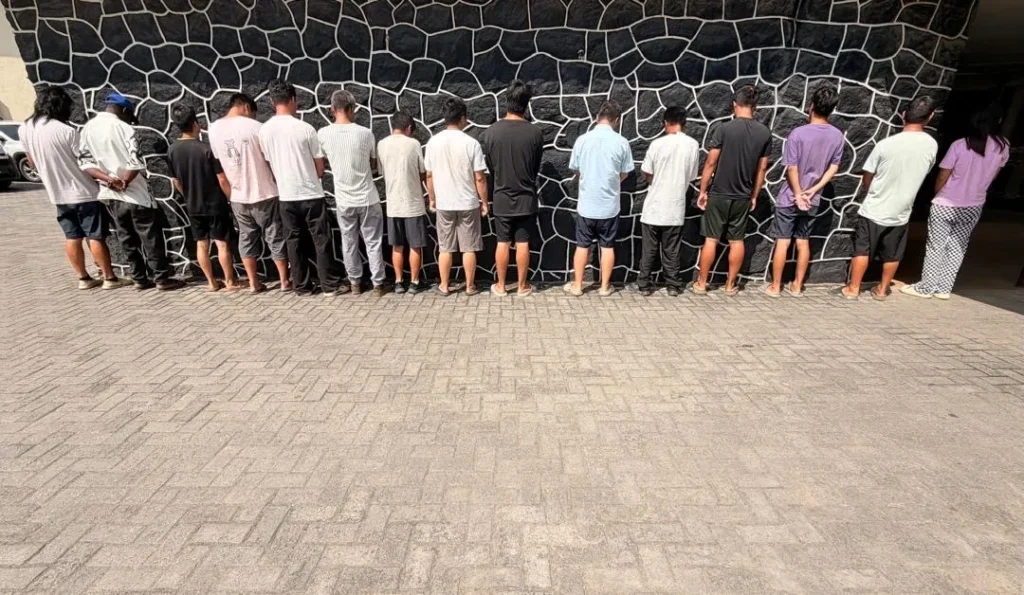
The Economic and Financial Crimes Commission has arrested 14 Chinese nationals and one Nigerian in connection with four allegedly illegal lithium-processing plants in Ogere, Ogun State. PREMIUM TIMES reported that the arrests were carried out on Friday, 23 October, by operatives of the commission’s Lagos Zonal Directorate 2 following intelligence gathering and surveillance. The commission says the suspects will be charged after investigations conclude, meaning no conviction has been established.
What Was Recovered?
According to the commission’s statement, operatives recovered bags of lithium rocks, 18 mobile phones, four laptop computers, two decoders, a television remote control and a trailer truck. The reported inventory does not establish the value or total weight of the lithium. The EFCC did not disclose the identities of the suspects, specify the precise quantity recovered or publicly explain which licences or regulatory permissions were allegedly absent. Those gaps are material to any attempt to evaluate the scale of the alleged operation.

Why Is Lithium Processing Under Scrutiny?
Lithium is an important input in rechargeable batteries used in electric vehicles and electronic devices. Nigeria’s mineral deposits have attracted interest as the country seeks to diversify revenue beyond crude oil. That opportunity also increases the need for credible oversight of extraction, processing, transport, taxation and exports. A plant’s presence alone does not establish illegality; investigators must identify the relevant legal requirements, determine whether operators held approvals and document any breaches. The case is therefore as much about regulatory clarity as it is about enforcement.
Which Questions Remain Unanswered?
The public still needs to know who owns the four facilities, whether they were registered businesses, what mineral-processing or environmental permissions were required, and whether inspectors had previously visited them. Authorities should also clarify the source of the lithium rocks, the destination of processed materials, and whether any export documentation is under examination. These are questions for investigators rather than conclusions that can be drawn from an arrest announcement. No evidence in the cited report establishes that every suspect personally controlled a plant or knew of any alleged regulatory violation.
What Does the Case Mean for Investors and Communities?
Clear rules are essential for legitimate investment and for host communities exposed to environmental and occupational risks. If facilities operate without proper oversight, public revenue may be lost and local residents may face unassessed hazards. Conversely, vague enforcement announcements can leave compliant businesses uncertain about the standards they must meet. Reporting should therefore seek records from relevant mining and environmental regulators, the Ogun State authorities, and the affected communities. The goal is to establish facts about permits, safety, revenue, and local impact rather than equating foreign nationality with wrongdoing.
What Would a Strong Investigation Establish?
A complete investigation would map the facilities to their corporate owners, determine what processing occurred at each location, and reconcile seized material with transport and procurement records. It would also identify which agencies were responsible for permits and inspections, and whether any previous warnings were issued. If prosecutors eventually file charges, the wording of the counts and supporting evidence will be more informative than the initial arrest totals. Independent inspection findings could clarify whether there were environmental or workplace-safety risks. Communities near the facilities may also have information about operating hours, traffic, dust, water use, and employment conditions, but such accounts require corroboration. Public confidence depends on distinguishing verified regulatory breaches from suspicions and on applying the same rules to domestic and foreign operators.
What Happens Next?
The EFCC says charges may follow completion of investigations. Reporters should watch for a court filing, a formal description of alleged offences, details of the facilities, and a verified account of recovered minerals. The suspects must be afforded the presumption of innocence. A further official statement should ideally explain the regulatory basis for describing the plants as illegal.
Trivane View
Enforcement against unlawful mineral activity is in the public interest, but arrests are only the beginning of accountability. The strongest outcome would be a transparent, evidence-based case that clarifies licensing obligations, protects communities, and distinguishes legitimate investment from unlawful operations. Nationality should never substitute for proof.
Related story
EFCC Confirms Custody of Faisal Maina, Plans Court Move to Enforced Prison Sentence