
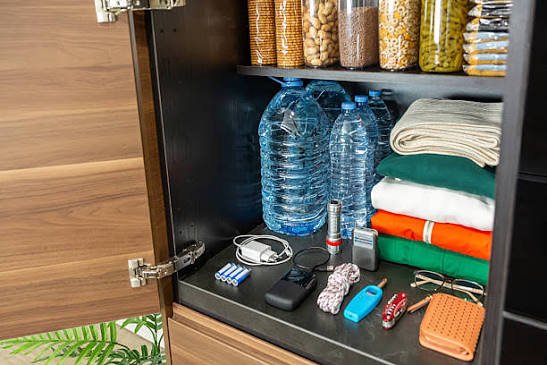
Households across the United Kingdom are being encouraged to keep basic emergency supplies at home in case essential services are temporarily disrupted.
The official guidance covers events such as severe weather, flooding, power cuts, water outages, infrastructure failures and situations in which people may be told to remain at home or evacuate.
It does not mean that the country is facing an immediate emergency. The advice is intended to help households cope safely for a few days if normal services become unavailable.
Preparation, not panic buying
The government’s Prepare campaign advises people to consider what their households would need during an emergency lasting several days.
Families are not being told to empty supermarket shelves or buy large amounts of food at once. The guidance says an emergency kit can be built gradually by adding affordable items over time.
People should choose food that suits their household’s normal needs, including any dietary requirements. Supplies should be checked regularly so that expired items can be replaced or used.
Food and water to keep at home
Recommended supplies include non-perishable food that can be eaten without cooking. Examples include tinned meat, fruit and vegetables, along with a manual tin opener.
Other practical options may include cereals, long-life products, dried food and snacks. However, households should remember that electricity or gas may not be available during a disruption, so food requiring extensive cooking may be less useful.
The guidance also recommends bottled water.
According to the official campaign, there is no single amount suitable for every household because emergencies and individual needs differ. It cites a minimum of between 2.5 and three litres of drinking water per person each day for survival.
Around 10 litres per person daily would provide greater comfort by covering basic cooking and hygiene needs. Additional water may be required for babies, medical equipment and pets.
Other useful emergency items
Food and water are only part of the recommended preparation.
Households may also consider keeping:
- A battery-powered or wind-up torch
- A portable phone-charging power bank
- A battery-powered or wind-up radio
- Spare batteries
- A basic first-aid kit
- Hand sanitiser and wet wipes
- Essential baby supplies
- Food and water for pets
- Copies of important contact details
People who take regular medication should ensure they have enough to cover several days. Those who depend on medical equipment should keep written operating instructions and charged backup batteries where possible.
The guidance recommends storing essential items together in an accessible place, particularly somewhere that can be reached safely during a power cut.
Households should also make a plan
Emergency preparation is not limited to buying supplies.
Families should discuss how they would contact one another if mobile networks were disrupted and identify a safe meeting point if they could not return home.
Important numbers can be written on paper and stored safely. These may include relatives, medical contacts, insurance companies and the number used to report a power cut.
People should also understand how to turn off the gas, electricity and water in their homes when instructed to do so.
Those living in areas vulnerable to flooding should check their local risk and register for official warnings. Eligible households with additional medical or accessibility needs may also join their utility provider’s Priority Services Register.
No reason to panic
The official advice is a general resilience measure, not evidence that ministers expect food shortages, war or a national shutdown.
Emergencies can arise with little warning, but most household preparations are simple and inexpensive. Keeping a few essential supplies can reduce pressure on emergency services and help families remain safe until normal services resume.
The central message is straightforward: prepare gradually, buy responsibly and follow official instructions if an emergency occurs.