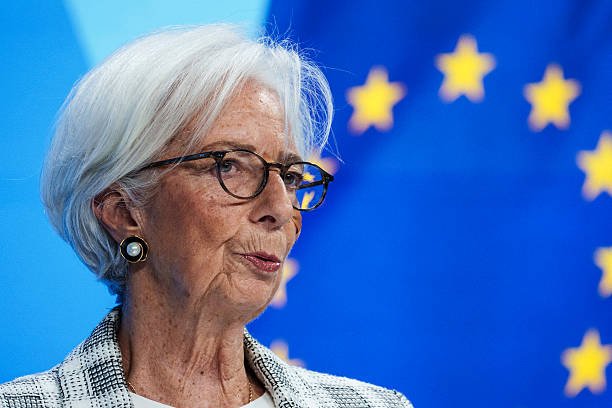
European Central Bank President Christine Lagarde will step down on February 7, 2027, bringing her leadership of the eurozone’s central bank to an early end and prompting the formal process of appointing her successor.
The ECB confirmed the decision on Thursday, October 29, in an official announcement Lagarde’s term was originally due to run until the end of October 2027, meaning she will leave several months before its scheduled conclusion.
The bank said Lagarde had informed its Governing Council and European Council President António Costa of her decision.
Why Lagarde Is Leaving
Lagarde said she wanted greater freedom to speak and engage on issues beyond monetary policy. In comments reported by Reuters, she explained that ECB officials are subject to neutrality requirements because of the institution’s mandate and independence.
“I don’t think that I can remain neutral,” Lagarde told reporters in Frankfurt “I’m interested in the truth, and I see the truth being very often damaged, contradicted by misrepresentation.”
She said she wants “the freedom of speech, the freedom of expression and the freedom to engage on matters that are not monetary policy matters.”
Those restrictions are intended to help preserve confidence in the bank’s decisions, which influence interest rates, inflation management and financial conditions across the euro area.
Lagarde became ECB president in November 2019, following her tenure as managing director of the International Monetary Fund. Her leadership has coincided with major economic challenges, including the COVID-19 pandemic, Russia’s full-scale invasion of Ukraine, energy-market disruption and a period of elevated inflation.

Succession Process Begins
European Council President António Costa said the process of appointing a successor would begin immediately, with the aim of ensuring an orderly transition before Lagarde’s departure.
“I would like to thank Madame Lagarde for her dedication as President of the ECB since November 2019,” Costa said in a statement “Europe has been well served by her leadership in uncertain times and her unwavering commitment to the European project.”
The ECB presidency is a key European Union role. The president leads the bank’s Governing Council meetings and communicates monetary policy decisions, including decisions affecting borrowing costs and efforts to keep inflation under control.
The selection of a successor will therefore attract attention from governments, financial markets, and businesses across Europe. The early departure also gives European leaders an opportunity to settle the appointment before Lagarde’s original term expires.
Who Could Replace Lagarde?
Two former central bank governors have emerged as leading contenders. Spain’s Pablo Hernández de Cos and the Netherlands’ Klaas Knot are widely regarded as the top candidates to replace Lagarde, according to Bloomberg and CNBC.
De Cos served as Bank of Spain governor from 2018 to 2024 and is now general manager of the Bank for International Settlements. Knot led the Dutch central bank from 2011 until 2025 and is a distinguished visiting fellow at the Peterson Institute for International Economics.
The appointment will also be shaped by other pending leadership changes. ECB Chief Economist Philip Lane and Executive Board member Isabel Schnabel are both due to leave next year, meaning the succession involves a broader reshuffling of the bank’s top roles.
What the Departure Could Mean for Europe
Lagarde’s departure does not automatically change the ECB’s policy direction. Monetary decisions are made through the bank’s established governing structures, and its mandate and independence remain in place during the transition.
Nevertheless, the next president will inherit decisions involving inflation, economic growth, borrowing costs, and financial stability. Markets will be watching for indications of how the new leadership could approach those challenges.
The timing adds further significance. France’s presidential election is due in 2027, and French government bond yields have risen sharply, widening the spread over German bunds to its highest level since the eurozone debt crisis. The next ECB president may face pressure to respond to financial turbulence in the bloc’s second-largest economy.
For now, the immediate priority is an orderly succession while the ECB continues its existing responsibilities. The implications for monetary policy will depend on the eventual appointee and the decisions taken by the bank’s governing bodies.