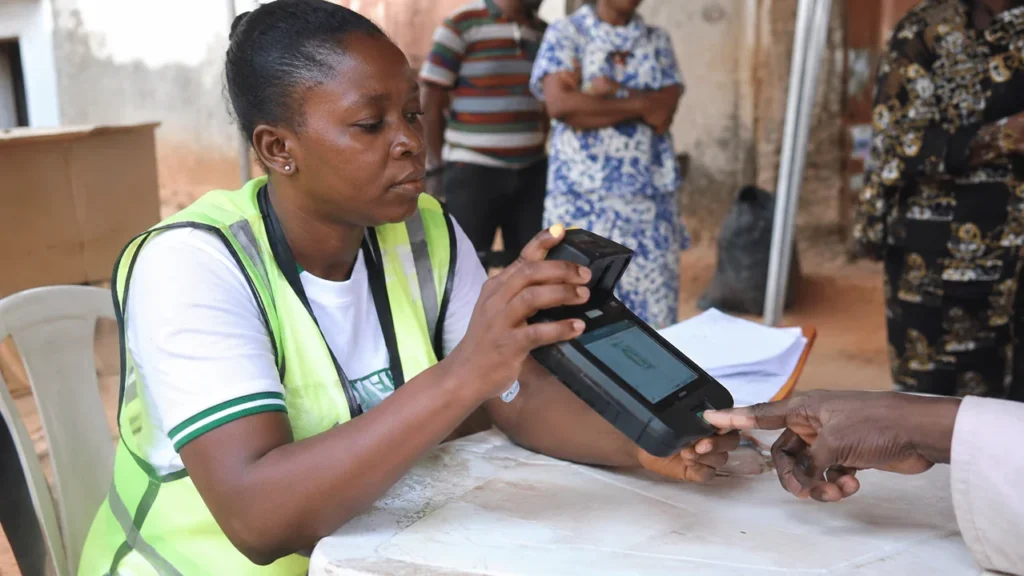
The Independent National Electoral Commission has selected 17,676 polling units for a nationwide mock accreditation and electronic result-upload exercise on Saturday, 28 November 2026. The selection comprises two polling units in each of Nigeria’s 8,838 registration areas, according to an announcement issued on Monday and reported by PUNCH on Tuesday. The announcement gives parties, observers and interested residents a clearer picture of where the rehearsal is expected to take place.
The test is scheduled to run from 8:30 a.m. to 2:30 p.m. and will use the Bimodal Voter Accreditation System, commonly called BVAS. It is intended to help the commission assess accreditation processes, device performance and the handling of electronic result uploads before the 2027 general elections. Because it is a technical rehearsal, the mock exercise should not be described as a public vote producing winners or as the formal start of election-day accreditation.
Why the Polling-unit list matters
Naming the locations makes the exercise more concrete than a general promise to test equipment. Election officials can prepare designated polling units, and observers can compare announced procedures with what is actually done. The arithmetic is straightforward: two units in each of 8,838 registration areas produce the total of 17,676. The list also allows political parties to decide where they will deploy representatives, provided participation arrangements are made clear.
A successful technology test would need to answer practical questions about connectivity, device reliability, identity checks, uploading procedures, and incident reporting. Even so, a rehearsal cannot guarantee that equipment will work perfectly under the much larger pressures of the general elections. What matters is how INEC documents any faults, publishes their resolution, and communicates the lessons to stakeholders before February 2027.

Parties raise preparation concerns
The African Democratic Congress presidential campaign council had asked INEC on 18 November to postpone the mock exercise, arguing that parties had received too little time to prepare. That request is part of the context for the announcement; it does not establish that the exercise has been postponed. The latest published arrangements still point to 28 November, and parties should verify any future change directly with the commission.
The commission has made the list of selected locations available through official channels, rather than asking voters to rely on forwarded messages. In an election season when fraudulent notices can circulate widely, the distinction between a genuine commission timetable and an unofficial graphic is significant. Constituents should confirm their local details through INEC before travelling to a purported exercise site.
The test ahead
INEC has separately stated that a substantial share of its BVAS machines has already been distributed to states, indicating that equipment preparation is proceeding alongside the test. Deployment counts, however, do not measure accuracy or readiness on their own. The commission will still need to show that personnel, procedures, and equipment work together under realistic conditions.
For now, the fresh angle is the newly specified national selection of polling units and the operating window, not the original announcement that a mock exercise would take place. Trivane News previously covered that earlier timetable. Reporting should therefore focus on which polling units have been selected, what the November 28 trial is designed to measure, and how problems will be reported.
What to watch
The selection across registration areas gives the test geographical reach, but the representativeness of the chosen sites also matters. Different polling locations experience different crowd sizes, levels of network access,, and logistical constraints. A small, well-managed mock site may not reveal every problem that could arise in a busy general-election environment. An informative post-exercise briefing should therefore explain how the locations were chosen, what problems were encountered, and which findings will lead to changes before the next national poll.
Voter education is another part of a credible rehearsal. Residents need to know that the exercise is designed to test accreditation and electronic reporting, not to elect public officials or replace the formal register. Political parties, civil society observers, and local election personnel should receive consistent instructions. When accounts differ, the commission should release a clear public explanation. Transparent publication of results from the technical test could offer more value than simply declaring that devices were deployed successfully.
A final report from the exercise would be especially useful if it separates the number of units where testing occurred from the number where every planned step was completed. It should also explain whether any devices failed and how quickly problems were resolved. Those measures would allow readers to assess performance instead of relying only on attendance photographs or broad official assurances that preparations are on course.
Related Trivane News
INEC Fixes November 28 for Nationwide Mock Poll Ahead of 2027 Elections
INEC Extends 2027 Election Staff Recruitment Deadline to December 3