The Federal Government says health insurance enrolment has risen to around 24 million Nigerians and plans to extend coverage through public funding and state schemes. Officials are considering wider enrolment among public workers and more support for underserved communities. Will expanded membership translate into affordable treatment when patients need it?
Read the full story here:
FG Targets Wider He
The Federal Government says it is working to extend health insurance beyond the estimated 24 million Nigerians already covered, as concerns persist over the cost of treatment and the large number of people who pay medical bills directly from their pockets. Its proposals combine increased government financing, state participation, and wider enrolment in existing programmes.
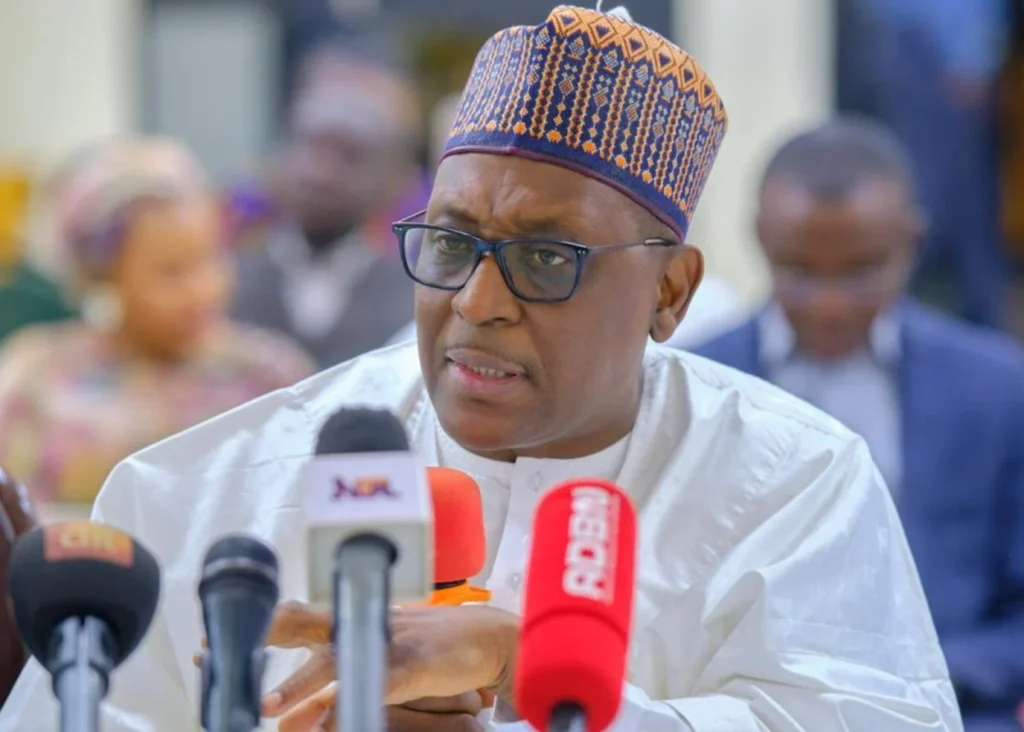
Dr John Ovuoraye, Director of Health Planning, Research and Statistics at the Federal Ministry of Health and Social Welfare, outlined the approach in an interview on Friday, according to PUNCH in its report published on Monday, 23 November. He said enrolment had increased from approximately 16 million to 24 million during the current administration. The numbers are an official estimate of enrolment, not a count of patients who have received free treatment.
Health insurance is designed to reduce the financial shock of illness by pooling contributions and paying for specified services. However, enrolment only offers meaningful protection when facilities are available, covered treatments are clear, and healthcare providers are paid promptly.

Public funding and state-level schemes
Ovuoraye said the government is working with state authorities to increase financial commitments and develop insurance schemes alongside the national framework. He also described a gradual move toward compulsory enrolment for civil servants and other public sector employees, with the possibility of extending the approach to organised groups.
Any compulsory scheme would need clear rules on who contributes, what services are covered, and how low-income workers are protected. A worker registered on paper may still face high costs if medicines, diagnostic tests, or specialist referrals fall outside the available package. Implementation and affordability will therefore be central to judging the policy.
The official linked the insurance expansion to the Basic Health Care Provision Fund, which draws financing from one per cent of the Federation’s Consolidated Revenue Fund. Support for primary healthcare facilities is intended to make care available closer to homes, particularly in communities where long journeys to hospitals can delay treatment.
Maternal care and vulnerable groups
The ministry says an intervention providing healthcare and delivery services for women is currently operating in 172 local government areas, with plans to extend its reach. The programme is particularly relevant in communities where delays in accessing maternity care or the cost of emergency treatment can have severe consequences for mothers and newborns.
Officials also want more vulnerable populations to receive cover, including eligible people in correctional facilities. Previous government decisions to extend insurance protection to such groups illustrate the difference between announcing eligibility and ensuring that participating facilities can actually deliver services.
For rural households, a functioning local health centre may matter more than the name of the insurance scheme. Families need to know where they can register, which providers accept the cover, and whether they must pay extra charges. Public communication should address those practical questions instead of relying only on national enrolment totals.
Coverage remains far from universal
Despite the increase claimed by officials, 24 million people represent only a minority of Nigeria’s population. Ovuoraye acknowledged that the country remains far from the desired level of health protection and identified population growth, household size, and public awareness as continuing challenges.
There are also questions about the reliability of financing. State governments differ in their fiscal capacity, while treatment costs can change rapidly. Insurance funds need consistent contributions and transparent payment systems so that hospitals can supply medicines and attend to patients without demanding unexpected fees.
The next test is not simply whether the enrolment figure rises again. It is whether insured Nigerians can receive timely care, whether poorer households are reached, and whether direct medical expenditure begins to fall. Those outcomes would show whether the proposed expansion is producing the protection it promises.
For the expansion to work, insurance enrolment must be matched by provider capacity. A facility that has no essential medicines, adequate staff, or functioning equipment may still require patients to travel elsewhere and incur expenses. State schemes also need predictable funding so that hospitals are reimbursed for treating registered beneficiaries. Publicly available reports on claims paid, services delivered, and complaints resolved would help distinguish meaningful financial protection from membership growth alone, particularly in underserved communities. Officials will face scrutiny over how they identify vulnerable families, how workers are enrolled, and whether benefits remain portable when beneficiaries move between states or change employment.
Facts
- Officials estimate health insurance enrollment at approximately 24 million.
- The Basic Health Care Provision Fund receives one per cent of the Federation’s Consolidated Revenue Fund.
- The reported maternal-health intervention currently covers 172 local government areas.
Related Trivane News
Nigeria Approves ₦40.76bn for Basic Healthcare, Plans Wider Coverage
Medical Academy Urges FG to Invest in Genomics and Precision Medicine