UEFA has confirmed that the 2026–27 Nations League knockout-stage and promotion-relegation play-off draws will take place on Friday, 20 November, at its headquarters in Nyon, Switzerland. The event is scheduled to begin at noon Central European Time, as European national teams move from the league phase towards March’s decisive ties.
The confirmation was published on Wednesday, 18 November, a day after the league phase concluded. The March 2027 fixtures will determine which League A teams advance towards the final tournament and which nations move between divisions. The finals are scheduled for 9–13 June 2027. As of Wednesday afternoon, the draw had not yet taken place, so any specific quarter-final pairing would be premature.

England finish ahead of Spain
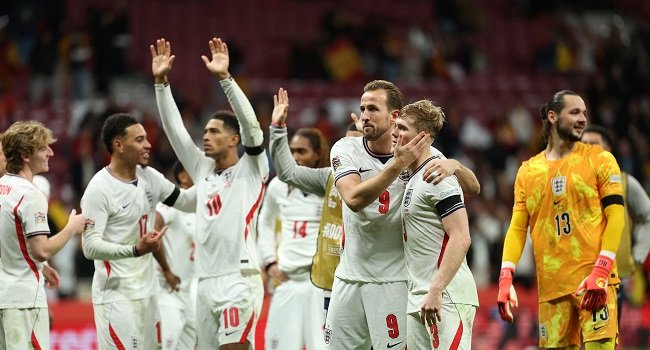
England finished Group A3 in first place on 15 points, level with Spain but ahead on the competition’s ranking criteria. Spain finished second; Croatia third with six points and Czechia fourth without a point. Both England and Spain qualified for the quarter-finals, while Croatia entered the League A/B play-offs and Czechia were relegated directly to League B.
UEFA’s final group listing confirms the placings following the November matches. Group position matters because the Nations League awards the eight League A quarter-final places to the four group winners and four runners-up. Those teams will play home-and-away knockout ties in March, with the winners advancing to the final tournament. The remaining teams face different consequences based on their final league positions.
Other leading teams confirmed
France won Group A1 with 13 points, followed by Belgium on 12. Germany topped a tightly contested Group A2 with 11 points, with the Netherlands second on the same total and Greece also finishing on 11. Portugal secured first place in Group A4 on 15 points, with Norway advancing as runners-up on nine. All eight teams are therefore known before Friday’s draw, even though their pairings are not.
The standings provide an unusual blend of established tournament contenders and tightly separated groups. In the England-Spain section, both teams finished with 15 points; in the Germany-Netherlands section, three teams ended on 11. UEFA applies its published head-to-head and other tiebreaking procedures to determine the official order, so raw points alone do not explain every placing.
Promotion and relegation at stake
The November outcome is not confined to the top division. In League B, Switzerland, Northern Ireland, Austria and Sweden won their groups and earned promotion to League A. Runners-up enter League A/B play-offs, while other teams face League B/C play-offs. UEFA has also set out adjustments to the promotion-relegation system as the tournament prepares for a three-league structure from 2028–29.
For supporters, Friday’s event will turn an abstract list of qualified nations into concrete fixtures. National-team managers will learn their likely March travel and preparation demands, while fans can begin assessing each side’s pathway. The draw, however, will not decide the title; four quarter-final ties still have to be played before the final tournament field is established.
A competition with a second chance
For teams outside the quarter-final picture, the play-offs are not an afterthought. Their outcomes can determine which division a country occupies in the next edition, influencing future opponents and development opportunities. The two-legged format also creates different strategic demands from a one-off final: managing an away match and protecting a return-leg advantage become central. That wider competitive context is why UEFA is holding several related draws at the same event.
What supporters should watch
The immediate questions involve the quarter-final pairings and the route each nation must navigate. The March schedule will matter for players who are in the middle of demanding club seasons, while the June finals will come after those campaigns conclude. England’s first-place finish gives supporters a clear sporting achievement to celebrate, but it does not guarantee an easier knockout match. UEFA’s official draw will replace all pre-draw speculation with confirmed opponents.
Related Trivane News
Spain Reach Nations League Quarter-Finals as Kane Equals England Appearance Record
Wales Recall Wilson and Rodon for Crucial Nations League Matches