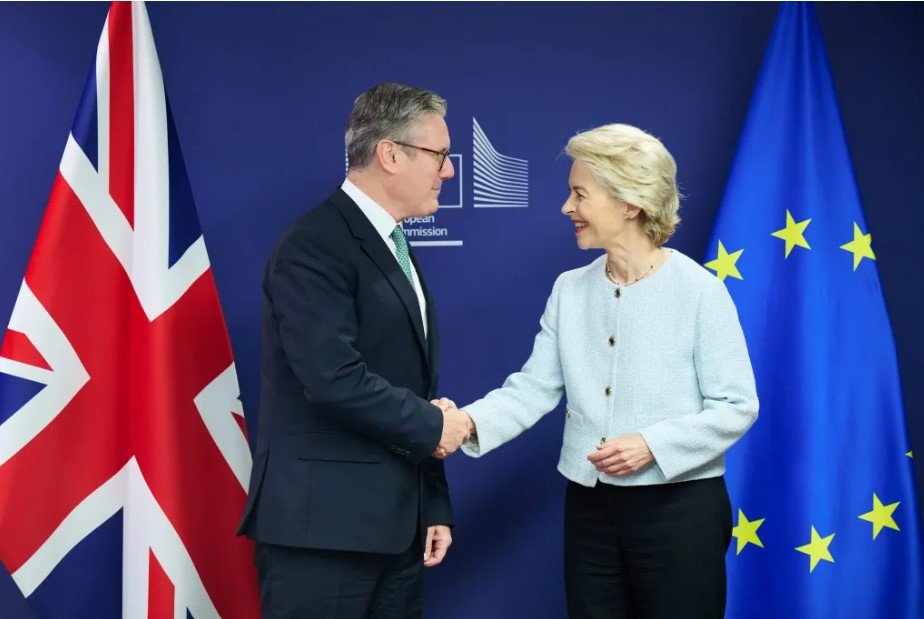
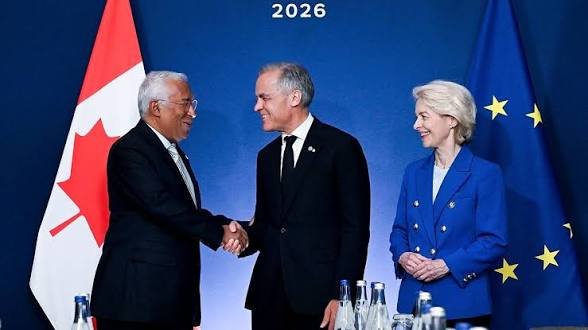
Canada is seeking a new security and economic alliance with the European Union as it tries to reduce its reliance on the United States amid worsening trade tensions with Washington.
Prime Minister Mark Carney has described the proposed relationship as a “unique alliance” covering trade, investment, defence, technology and other areas of shared interest.
Carney has made clear that Canada is not seeking EU membership. Instead, Ottawa wants a specially designed partnership that would deepen its access to European markets and strengthen cooperation between Canada and the 27-member bloc.
The exact structure of the proposed alliance has not yet been defined, and no formal agreement has been reached.
Carney takes proposal to Europe
Carney travelled to Strasbourg this week as the first foreign head of government invited to attend the European Commission president’s annual State of the European Union address.
He is expected to address the European Parliament on Thursday, 17 September, and explain his plans for a closer relationship with Europe.
In an official statement announcing the visit, the Canadian Prime Minister’s Office said Canada was diversifying its international partnerships in response to a rapidly changing world.
The statement described European countries as Canada’s natural partners because of their shared values, history and economic interests.
Carney has also promised to double Canada’s trade with countries outside the United States over the next decade.
Reuters reported that officials are considering closer cooperation in trade, defence and digital security, although no detailed plan for a broader alliance has been discussed at the highest level.
Existing cooperation provides a foundation
Canada and the EU already have a major trading relationship through the Comprehensive Economic and Trade Agreement, known as CETA.
The agreement has been provisionally applied since 2017, but it has not been fully ratified by every EU member state.
Canada and the EU also launched a new strategic partnership and a security and defence partnership in 2025. These frameworks cover areas including artificial intelligence, cybersecurity, digital infrastructure, energy and defence.
In February 2026, Canada became the first non-European country to join the EU’s Security Action for Europe initiative. The programme supports joint defence investment and procurement.
Canada says the EU was its second-largest trading partner for goods and services in 2025, with total trade worth approximately C$178 billion.
EU governments remain cautious
Despite growing cooperation, Canada may struggle to secure the kind of special status Carney is seeking.
The EU does not currently have a formal “associate membership” category for a country that is not seeking eventual full membership.
The Financial Times reported that several EU capitals had responded cautiously to the proposal. Diplomats reportedly favour making better use of existing agreements rather than creating a new membership-like arrangement for Canada.
Closer access to the EU single market would also require difficult negotiations over regulations, agriculture and industrial standards.
Euronews reported that cooperation may be easier in areas such as critical minerals, energy, technology, defence procurement and support for Ukraine.
Relations with Washington shape the move
Canada’s push towards Europe comes as its relationship with the United States faces renewed pressure over tariffs and trade negotiations.
US President Donald Trump has also repeatedly suggested that Canada should become America’s 51st state, comments Canadian leaders have rejected.
The tensions have encouraged Ottawa to seek more diverse trading and security relationships. However, the United States remains Canada’s largest economic partner, and replacing that relationship with European trade would not be possible in the short term.
Canada and the EU are expected to continue negotiations before their next summit, scheduled to take place in Canada on 29 and 30 October 2026.