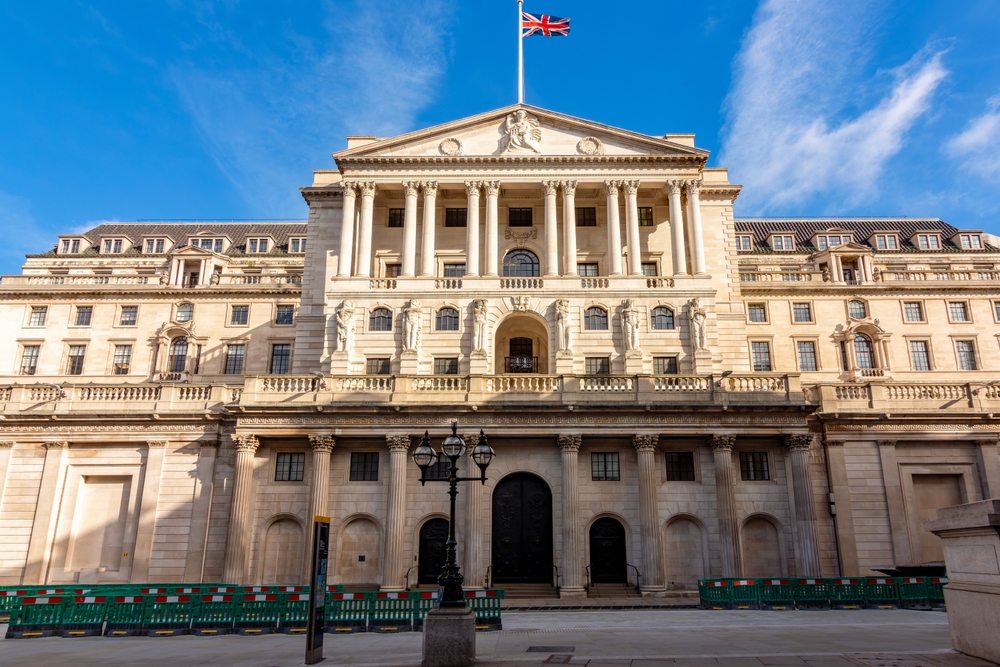
The Bank of England has increased its benchmark interest rate from 3.75% to 4%, marking its first rate rise since August 2023 as prolonged conflict in the Middle East continues to drive up energy prices.
The decision was announced on Thursday, November 5, following a meeting of the Monetary Policy Committee (MPC). Eight of the nine members voted for a 0.25-percentage-point increase, while one member, Catherine Mann, favoured a larger rise to 4.25%.
According to the “Bank of England’s November monetary policy statement“, the increase was necessary because higher energy costs were creating further inflationary pressures.

Inflation Could Reach 5% by Mid-2027
UK inflation stood at 3.5% in September, above the Bank’s 2% target. The central bank now expects inflation to rise to approximately 5% by the middle of 2027, partly because elevated energy prices are expected to feed into household and business costs.
The Bank said there was still limited evidence that higher energy costs had significantly affected prices and wages beyond directly affected sectors. However, policymakers warned that these effects could become more widespread if energy prices remain high.
Governor Andrew Bailey said the increase should not be interpreted as the beginning of an inevitable series of rate hikes. He added that further decisions would depend on how the conflict and energy prices develop.
What the Increase Means for Households and Businesses
A higher Bank Rate can make borrowing more expensive, potentially affecting people with variable-rate mortgages, loans and other forms of credit. Businesses may also face higher financing costs when borrowing to invest or expand.
Households renewing fixed-rate mortgages could also encounter higher borrowing costs if lenders adjust their products in response to changing interest-rate expectations.
The “Bank of England” said the increase is intended to limit the extent to which higher energy costs spread into prices across the wider economy.
More Increases Remain Possible
The decision comes as the Bank faces the challenge of containing inflation without placing unnecessary pressure on economic activity.
As “Reuters reported” some policymakers indicated that another increase could be necessary if inflationary pressures persist. However, others emphasised that future decisions would depend on evidence of how energy costs affect wages, prices and household demand.
The Bank’s next monetary policy decision is scheduled for December 17, 2026.