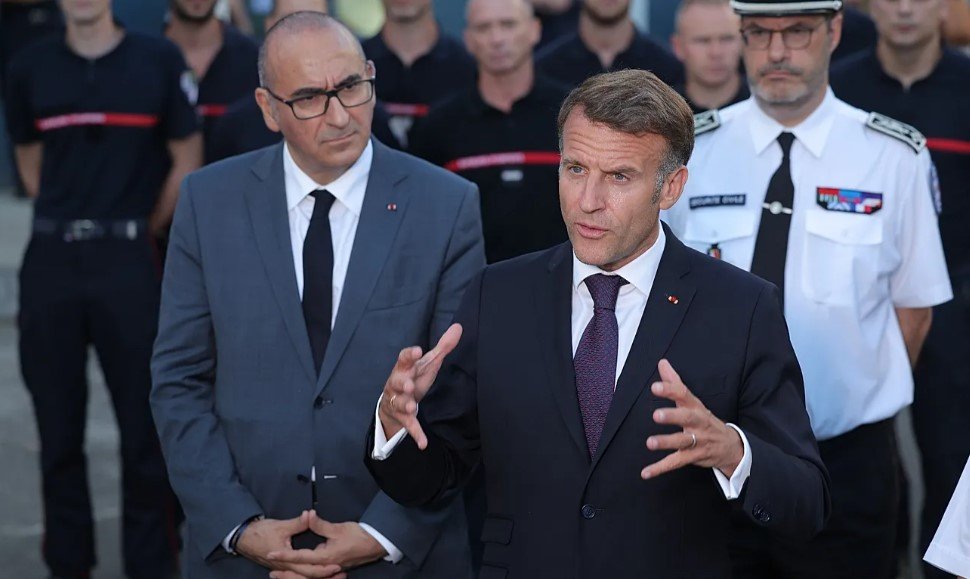
French President Emmanuel Macron has refused to accept Interior Minister Laurent Nuñez’s resignation following a weekend of violent unrest that left businesses damaged and prompted thousands of arrests across France.
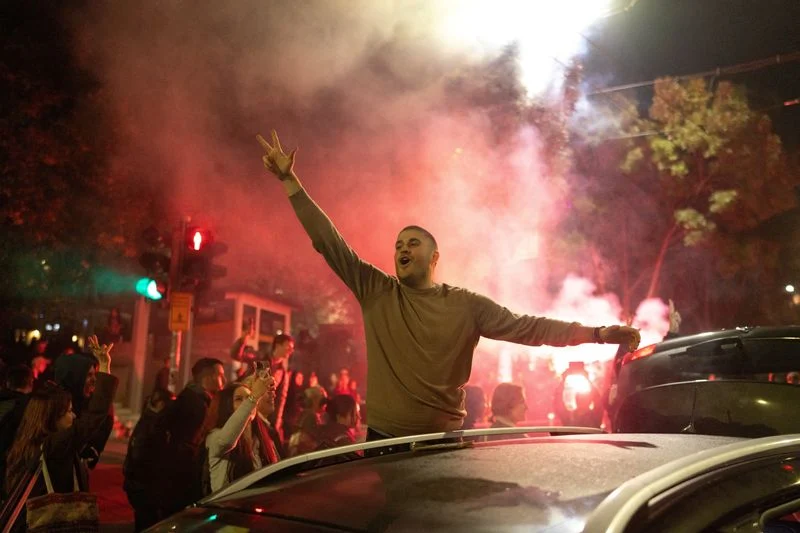
The violence erupted during demonstrations on 17 and 18 October 2026 over education conditions, the rising cost of living, and wider dissatisfaction with public services.
Many demonstrators protested peacefully, but groups involved in the unrest looted shops, damaged vehicles, and attacked public buildings in cities including Paris, Marseille, and Lyon.
According to Reuters, Macron rejected Nuñez’s resignation and demanded changes to policing methods following criticism of the security response.
Why Macron rejected the resignation
The French presidency said Macron wanted Nuñez to remain in office to maintain continuity in the command of security forces during the crisis.
In a statement reported by Euronews, the Élysée said the president had instructed the minister to introduce new operational methods to deal with violent rioters.
Macron also acknowledged shortcomings in the authorities’ ability to anticipate the violence and gather the intelligence needed to prepare an effective response.
The decision means Nuñez will remain responsible for implementing changes while the government faces questions about its handling of the demonstrations.
Nuñez said he had offered to resign because of the scale of the damage and the failures in the police response.
Interior minister acknowledges policing failures
Nuñez acknowledged that police had lost control in some major cities during Saturday’s unrest.
He estimated that approximately 60,000 law enforcement personnel were deployed across France on 17 October.
However, he said the authorities had underestimated the scale of the disorder and that the number of officers available in some locations had been insufficient.
The minister’s admission followed reports of widespread damage to businesses and public property.
In Paris, Mayor Emmanuel Grégoire said approximately 30 shops were targeted during further disorder on Sunday.
Justice Minister Gérald Darmanin reported that more than 2,330 people had been taken into police custody nationwide over the weekend.
The number refers to people detained by police, not individuals convicted of criminal offenses.

Protests over education and living costs
The weekend demonstrations followed weeks of protests by secondary school students about overcrowded classrooms, teacher shortages, and inadequate investment in education.
Other demonstrators joined protests against rising living costs and deteriorating public services.
The demonstrations brought together people with different grievances, although the violence was not representative of everyone who participated.
Groups involved in looting and vandalism damaged shops, vehicles, and public buildings, creating additional pressure on the authorities to restore order.
The distinction between peaceful protest and criminal violence remains important as the government considers further security measures.
Mayors demand answers over security response
Local leaders criticised the government’s handling of the unrest, particularly the apparent failure to prevent extensive damage in major urban centres.
Mayors in Paris, Marseille, and Lyon raised concerns about the consequences for businesses, residents, and public spaces.
The criticism has intensified scrutiny of the national government’s planning and deployment of security personnel.
Business owners affected by the violence have also questioned why the police were unable to prevent looting in some locations.
Authorities must now assess whether the difficulties arose from intelligence failures, insufficient personnel, operational decisions, or a combination of factors.
Prime Minister proposes localised curfews
Prime Minister Sébastien Lecornu has called for narrowly targeted curfews in areas affected by the violence.
The Associated Press reported that Lecornu proposed limited, localised restrictions rather than a nationwide curfew.
The measures are intended to prevent further disorder while allowing the authorities to concentrate resources in areas considered most at risk.
However, the proposal raises questions about how restrictions would be applied and how the right to peaceful assembly would be protected.
AP also reported that at least 3,000 businesses had been affected by damage during the unrest.
The scale of the destruction has increased pressure on the government to explain its immediate security response and its plans for preventing further violence.
Government faces continuing pressure
Macron’s decision to retain Nuñez has preserved continuity within the Interior Ministry, but it has not ended criticism of the government’s handling of the unrest.
The administration must now address both the security failures and the grievances that brought demonstrators onto the streets.
Any changes to policing will need to distinguish peaceful demonstrators from those responsible for violence and destruction.
The government also faces pressure to provide clarity on proposed curfews and explain how it intends to protect businesses and public infrastructure.
For Macron, the challenge is to restore public confidence in the authorities while responding to concerns about education, living costs, and public services.