Artificial intelligence could expand the United States economy to $44 trillion by 2030 if the technology continues to advance rapidly, according to a projection presented by Anthropic co-founder Jack Clark.
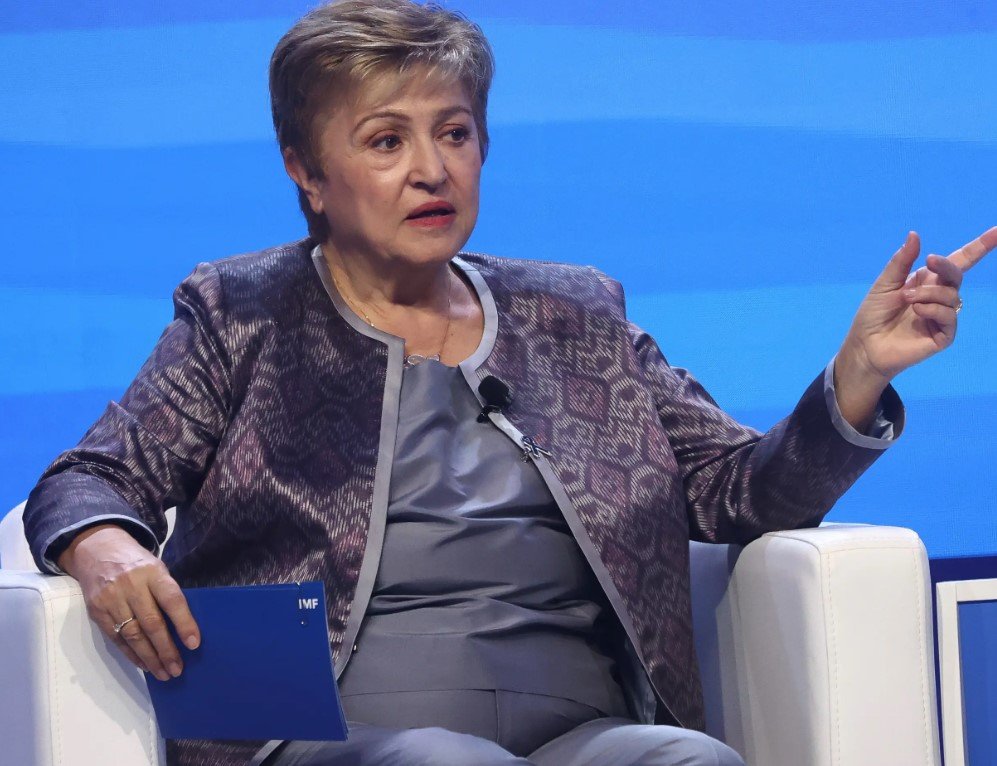
Clark discussed the estimate on Saturday, 17 October 2026, during the International Monetary Fund (IMF) and World Bank annual meetings in Bangkok, Thailand.
According to Reuters, the figure comes from one of Anthropic’s internal economic models, which suggests that AI could increase US economic output by almost 50% from its current level of just over $30 trillion.
The estimate is a conditional scenario, not an official IMF forecast or a prediction that such growth is guaranteed.
Clark acknowledged that the figure was unusually ambitious but argued that continued improvements in AI could accelerate scientific discoveries and support the creation of new industries.
How AI could affect economic growth
Clark said increasingly capable AI systems could help researchers and businesses solve problems more quickly, improving productivity across several sectors.
Potential applications include scientific research, medicine, engineering, and the development of new technologies.
Greater productivity can support economic growth when businesses produce more goods and services using available resources.
However, the economic impact depends on whether companies can turn advances in AI into practical improvements in their operations.
It also depends on whether new industries and products emerge, creating economic activity that does not exist today.
The $44 trillion scenario assumes that technological progress continues and that the resulting innovations have a substantial effect on the wider economy.
It does not mean that every business will benefit equally or that the projected gains will automatically translate into higher wages and living standards.

Jobs and investment remain major concerns.
Rapid advances in AI could also change the labour market.
Some routine tasks, including aspects of customer service and administrative work, are increasingly being automated.
At the same time, new industries and occupations could emerge as businesses develop and adopt AI-powered products and services.
The balance between jobs displaced and jobs created remains uncertain.
Companies are also investing heavily in data centres, advanced computing equipment, and the infrastructure needed to develop and operate AI systems.
These investments have supported economic activity, but they have raised questions about whether future productivity gains will justify the spending.
The IMF has warned that a slowdown in AI-related investment could create risks for economic growth and financial markets.
In a separate Reuters report on 16 October, IMF Managing Director Kristalina Georgieva cautioned that AI’s risks could outweigh its benefits if adequate safeguards and ethical standards are not established.
Her remarks reflected broader concerns among policymakers about employment disruption, unequal access to technology, and the possibility of financial instability.
Clark calls for stronger international safeguards
Alongside his economic projections, Clark warned that governments have a narrowing opportunity to establish effective rules for increasingly powerful AI systems.
He called for international cooperation to manage risks that cannot be addressed adequately by individual companies or countries acting alone.
One area of concern is biological research.
AI systems could support legitimate scientific work, including the study of diseases and the development of treatments. However, advanced capabilities could also be misused to assist harmful biological research.
Clark urged policymakers to take such risks seriously and establish stronger oversight before the technology becomes more difficult to control.
Cybersecurity and other forms of malicious use also remain concerns as AI systems become more capable.
The warning does not mean that AI has already escaped human control. It reflects concern that technological development may move faster than the institutions responsible for overseeing it.
IMF discussions highlight opportunities and risks
Artificial intelligence was a major subject at this year’s IMF and World Bank meetings.
Policymakers discussed its potential to improve productivity and economic growth, alongside the risks of job displacement, unequal access, and inadequate regulation.
An Associated Press report on the meetings described calls for stronger safeguards and policies to help workers and economies adjust to technological change.
The discussion also highlighted the importance of electricity, digital infrastructure, and access to computing resources.
Countries without reliable power supplies or sufficient technological investment may struggle to benefit from AI at the same pace as wealthier economies.
This could widen existing economic differences unless governments and businesses address barriers to adoption.
What the $44 trillion projection means
Clark’s projection illustrates the scale of the economic transformation that some AI developers believe is possible.
It remains an estimate produced by Anthropic, a company directly involved in developing and commercialising AI technology.
Independent economic outcomes will depend on productivity growth, business adoption, investment costs, labour-market changes, and the effectiveness of public policy.
The projection should therefore be assessed alongside evidence of actual economic gains rather than treated as an established forecast.
Clark’s remarks leave policymakers facing two connected challenges: encouraging innovations that could improve economic performance and establishing safeguards before increasingly capable systems create risks that are harder to manage.
Whether AI can deliver growth on the scale Anthropic’s model suggests will become clearer as businesses demonstrate measurable productivity improvements and governments respond to the technology’s changing capabilities.