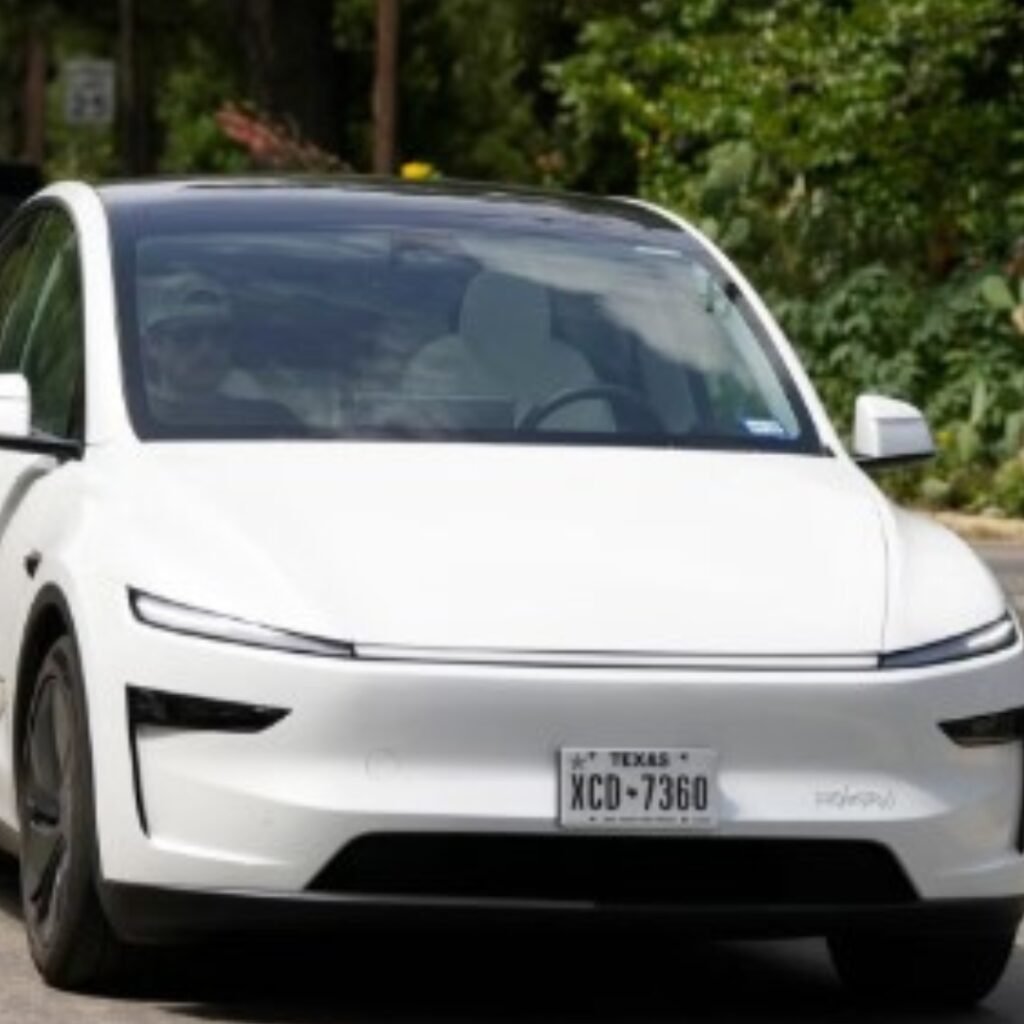
The US National Highway Traffic Safety Administration (NHTSA) is reviewing allegations that Tesla robotaxis exceeded posted speed limits in active school zones.
The agency opened a defect petition evaluation on 9 October 2026, following a complaint received on 23 September. The review will determine whether the allegations justify a formal safety investigation.
According to NHTSA’s official case document, the petition concerns approximately 1,000 Tesla Model Y and Cybercab vehicles from the 2026 model year, operating with the company’s Automated Driving System engaged.
The petitioner submitted three links to video footage as supporting evidence.
NHTSA’s initial case summary lists four reported incidents, including three drawn from social media. No crashes, injuries, or fatalities were recorded in the summary.
The agency has not established that Tesla’s vehicles have a safety defect or that the company violated traffic laws.
Tesla’s robotaxi expansion faces further scrutiny
The petition comes as Tesla expands its autonomous ride-hailing operations in the United States, with Austin, Texas, serving as an early commercial market.
The company has already faced separate federal scrutiny over its Cybercab.
On 4 September, NHTSA announced an investigation into whether Tesla had properly certified the Cybercab as meeting applicable federal motor vehicle safety standards.
That investigation concerns the vehicle’s design and certification, including its lack of conventional driving controls such as a steering wheel and pedals.
The latest petition raises a different concern: whether Tesla’s automated driving technology correctly recognises and follows speed restrictions in active school zones.
These restrictions are intended to protect children and other road users, particularly during periods when pupils are arriving at or leaving school.
As Dow Jones Newswires reported, federal regulators are assessing the petition before deciding whether to proceed with a formal defect investigation.
Wider concerns about driverless vehicle safety
Tesla is not the only autonomous vehicle operator to face questions about safety near schools.
Waymo, owned by Alphabet, has also faced federal scrutiny following incidents involving its driverless vehicles passing stopped school buses.
Those incidents concern different circumstances from the allegations against Tesla, but both raise questions about how automated vehicles respond to traffic restrictions designed to protect children.
For Tesla, the immediate issue is whether the evidence submitted to NHTSA provides sufficient grounds for further investigation.
The petition evaluation does not establish that the alleged speeding incidents occurred as described or that Tesla’s automated driving system is defective.
A decision on whether to open a formal investigation remains pending.

Trivane View
Autonomous driving technology brings new possibilities for transport, but its safety depends on how reliably vehicles respond to everyday road conditions. Speed restrictions near schools are particularly important because children are among the most vulnerable road users.
NHTSA’s review provides an opportunity to examine the allegations through a formal regulatory process. Any conclusion about Tesla’s responsibility should be based on verified evidence rather than assumptions about the technology.