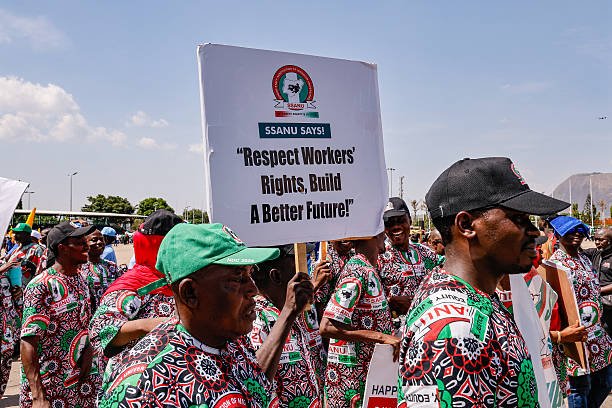
Public sector unions in Nigeria have called a three-day warning strike from Friday, 2 October, after their deadline for the Federal Government to respond to demands on petrol prices and wages passed.
The Joint National Public Service Negotiating Council (JNPSNC) directed members in federal, state and local government employment to join the action until Sunday, 4 October. Its circular called for full compliance across affiliated unions.
The directive is nationwide, but the number of workers who have stopped work and the extent of disruption at individual offices have not yet been independently established. (thecable.ng, punchng.com)
Why the unions called the strike
The council says rising petrol prices and household costs have placed workers and their families under severe pressure. It wrote to President Bola Tinubu on 21 September and gave the government until 30 September to address its demands.
When those demands remained unresolved, the council’s national secretary, Gbenga Olowoyo, sent a circular to union leaders on 1 October instructing them to mobilise for the strike. He said workers at all three tiers of government should participate.
The JNPSNC also wanted its concerns addressed in Tinubu’s Independence Day speech. Union leaders said the address did not offer the specific response they had requested. (thecable.ng)
Tinubu did acknowledge in the speech that many households were struggling with food, healthcare, school fees and transport. He outlined plans to lower production and transport costs and strengthen support for poorer households. He did not announce a reduction in the petrol price to the level demanded by the council. (statehouse.gov.ng)
Petrol and wage demands
The council wants the pump price of petrol reduced to ₦500 a litre. It has also asked for an immediate wage award to ease pressure on workers while longer-term pay talks take place.
Its third main demand is the establishment of a committee to negotiate a new national minimum wage ahead of 2027. The council has proposed a minimum of ₦500,000; that figure is a union demand, not an agreed wage or a government commitment. (vanguardngr.com)
In its earlier submissions, the council suggested an intervention fund for fuel costs and improved arrangements for supplying crude oil to domestic refiners. Those are proposals from the unions. Their cost, funding and likely effect on pump prices have not been settled.
Nigeria’s current statutory minimum wage is ₦70,000. The gap between that figure and the proposed ₦500,000 illustrates the scale of the council’s pay request, although any new rate would require negotiation and the relevant legal steps. (premiumtimesng.com, vanguardngr.com)
Who has been asked to stop work
The council brings together several public sector unions, including the Nigeria Civil Service Union, the Association of Senior Civil Servants of Nigeria, the Medical and Health Workers Union, and the National Association of Nigerian Nurses and Midwives.
Its notice covers staff of government ministries, departments and agencies as well as state and local government workers. The Nigeria Labour Congress had previously backed the council’s demands on petrol and pay. (vanguardngr.com, vanguardngr.com)
Membership of a union in the council does not, by itself, establish that every member at every workplace has stopped working. There is no verified nationwide breakdown yet of turnout, offices closed or services suspended.
That distinction matters particularly for people who rely on government offices and healthcare facilities. The union’s call may affect those services, but the availability of any specific service should be checked locally rather than assumed from the nationwide notice.
A warning strike over wider hardship
The three-day action is intended to put pressure on the government to negotiate. It is scheduled to end on Sunday, but the council has not announced an agreement resolving the underlying demands. The notice does not establish how each agency will operate during the action. (thecable.ng)
In his Independence Day address, Tinubu defended the economic reforms introduced since 2023 and said the government would focus on reducing costs, creating jobs and expanding production. He accepted that many Nigerians still faced immediate financial difficulties. (statehouse.gov.ng)