Algeria’s lower house of Parliament has approved amendments that would expand the death penalty for deliberately setting forests and fields on fire, following deadly wildfires in the country’s northeast.
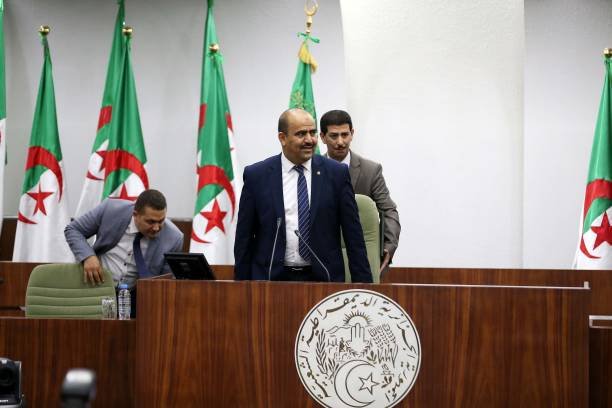
The National People’s Assembly voted on Thursday, 1 October, to approve the bill. Associated Press reported that it passed by 307 votes to 17, with seven abstentions.
The legislation still requires review by the Council of the Nation, the upper house. The lower-house vote should therefore not be presented as a completed change to the law or as evidence that executions have resumed. (apnews.com)
What the bill would change
The amendments would make deliberately setting fire to forests, wooded areas, and cultivated or uncultivated fields punishable by death.
AFP reported that the bill also extends capital punishment to child kidnappings involving torture, sexual assault or mutilation. (afp.com)
The Cairo Institute for Human Rights Studies, which reviewed the draft, said its scope goes beyond people accused of personally starting fires.
According to the organisation, proposed provisions also cover inciting, encouraging, financing, organising, or facilitating certain acts of arson, including through information technology and social media.
That broader wording is central to concerns about how the legislation could be applied. The institute warned that provisions referring to national unity, foreign involvement, and public security could expose government critics to capital charges. (cihrs.org)
Government defends tougher penalties
Justice Minister Lotfi Boudjemaa defended the changes as a necessary response to serious crimes.
AFP reported that he told lawmakers that investigations had revealed links between arson and foreign parties. Those claims should be understood as the government’s account, rather than as an independently established explanation for the summer’s fires.
Boudjemaa also said that people facing death sentences would retain avenues for appeal and could seek a presidential pardon.
The ruling coalition supported the bill, while the secular Rally for Culture and Democracy opposed it. Its MP, Rachid Hassani, told AFP that the party had consistently campaigned against capital punishment and argued that protecting citizens should not involve the state taking revenge. (afp.com)
Executions have been halted since 1993
Algeria has not carried out an execution since 1993, although the death penalty remains in its criminal law and courts continue to impose death sentences.
The current debate therefore concerns both expanding the offences carrying capital punishment and government threats to resume executions after more than three decades.
In a September statement, Amnesty International said President Abdelmadjid Tebboune instructed the Justice Minister on 30 August to amend the Penal Code following the wildfires.
It said Tebboune warned that people sentenced to death would be executed once they had exhausted their appeals.
Amnesty also noted that existing Algerian law already punishes arson with prison sentences, including life imprisonment, and allows the death penalty when an intentional fire causes death. The proposed amendments do not introduce criminal penalties into an area previously left unpunished. (amnesty.org)
Rights groups urge upper house to reject bill
In its response to Thursday’s vote, Amnesty International called on the upper house to reject the amendments.
Diana Eltahawy, its deputy regional director for the Middle East and North Africa, criticised the speed of the legislative process and said meaningful consultation with lawyers and human rights organisations had been lacking.
The organisation argued that extending capital punishment conflicts with Algeria’s human rights obligations and its support for United Nations resolutions calling for a moratorium on executions.
It also called for investigations into all factors that contributed to deaths, including potential failures in wildfire prevention and emergency response. (amnesty.org)
The Cairo Institute separately warned that past prosecutions following the 2021 Kabylie fires raised concerns about political associations and online activity being used to connect defendants to criminal conspiracies.
Those are allegations and assessments by rights organizations. They do not establish that every prosecution under the proposed provisions would be politically motivated. (cihrs.org)
Wildfire losses remain disputed.
The government’s official death toll from the late-August fires was 12, but AFP reported that witnesses described substantially more deaths. (afp.com)
Amnesty said authorities had not disclosed comprehensive casualty figures. It called for families and survivors to receive accurate information about missing and deceased people.
The uncertainty over the toll makes it important to distinguish the official count from other reported figures, rather than present either as a complete account of the losses suffered by affected communities. (amnesty.org)
The next legislative step is upper-house consideration. Until that process is completed and implementation is established, the verified development is approval of the amendments by the lower house.
Whether Algeria will actually resume executions remains a separate question from whether Parliament expands the list of capital offences. (apnews.com, amnesty.org)