Nigeria’s National Assembly has suspended all its official visits to South Africa over continued reports of attacks against Nigerians and other African migrants.
The suspension also covers legislative events organised or hosted by South African institutions. It will remain in place until further notice.
The National Assembly announced the decision in a statement published on 11 September by the National Assembly Library Trust Fund.
What the suspension covers
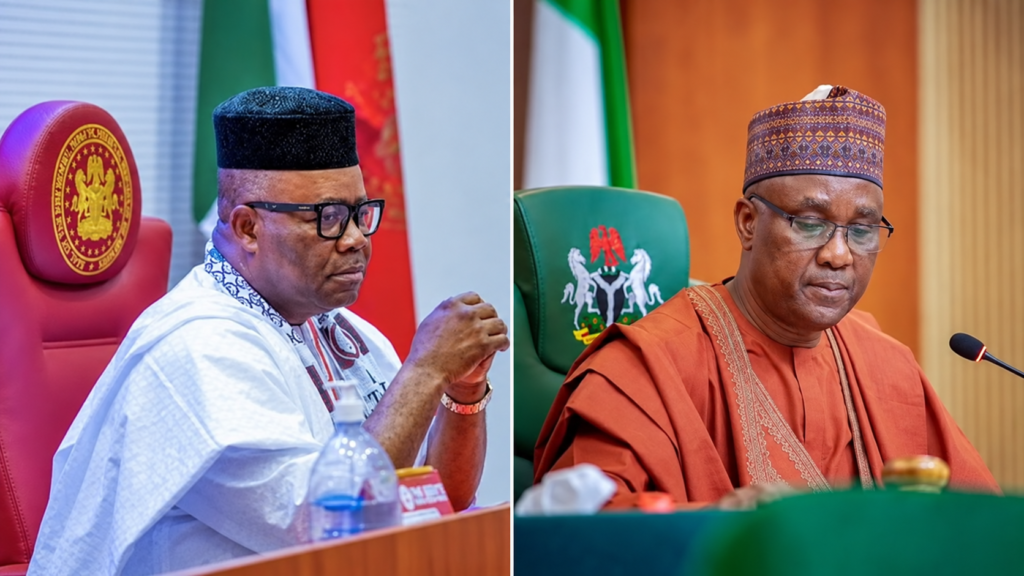
According to the statement, the decision was approved by the National Assembly leadership, headed by Senate President Godswill Akpabio and House of Representatives Speaker Tajudeen Abbas.
Clerk of the National Assembly Kamoru Ogunlana was directed to communicate the decision to lawmakers, committees, officials and other members of staff.
The statement said the suspension covers official visits by senators, members of the House of Representatives, legislative committees, officials and staff.
It also prevents them from attending conferences, seminars, workshops, meetings and parliamentary exchanges organised or supported by South African legislative institutions.
Both physical and online events are covered by the directive. Any exception will require approval from the National Assembly leadership.
Existing invitations and planned programmes involving South African legislative institutions will also be reviewed.
Government visits are not affected
The decision is limited to the National Assembly. It does not suspend diplomatic relations between Nigeria and South Africa.
Government officials can still attend diplomatic meetings and other official engagements involving both countries.
The National Assembly said the measure was not intended to damage the long-standing relationship between the two countries. It described the decision as an expression of concern about the safety and welfare of Nigerians living and doing business in South Africa.
Reuters also reported that the restriction does not apply to Nigerian government visits or meetings.
Lawmakers demand protection for Nigerians
The National Assembly said it was concerned by reports of Nigerians being killed, injured, displaced or forced to leave their homes and businesses.
It also referred to reports of intimidation and damage to property during recent anti-migrant unrest in South Africa.
The Assembly urged the South African government to protect Nigerians and other foreign nationals, investigate reported attacks and prosecute those responsible.
Ogunlana said the National Assembly could not ignore reports of Nigerians losing their homes, investments and businesses because of repeated violence.
The Associated Press reported that thousands of migrants have left South Africa since anti-immigration protests intensified earlier in 2026.
Tensions have grown during 2026
The latest decision follows months of tension between Nigeria and South Africa over attacks on migrants.
Nigeria’s Minister of State for Foreign Affairs, Sola Enikanolaiye, said in July that 98 Nigerians had died in mob and hate-related incidents in South Africa since 2022, according to Reuters.
Reuters also reported that Nigeria’s acting high commissioner in Pretoria said 1,695 Nigerians had been voluntarily evacuated during the unrest in 2026.
These figures were provided by Nigerian officials.
During talks in Abuja in July, South African International Relations Minister Ronald Lamola said his government opposed xenophobia, racism and discrimination.
Reuters reported that Lamola said the attacks were not supported by the South African state. He also said suspected crimes involving foreign nationals should be handled through the courts, not through violence or private enforcement.
South Africa has recently faced protests demanding the removal of undocumented migrants. Some foreign nationals with legal immigration status have also reported threats and harassment.
Reuters said the Nigerian and South African governments had earlier agreed to reduce tensions and support lawful investigations into attacks on foreign nationals.
At the time of publication, neither Nigeria’s foreign ministry nor the South African government had publicly responded to the National Assembly’s latest directive.