
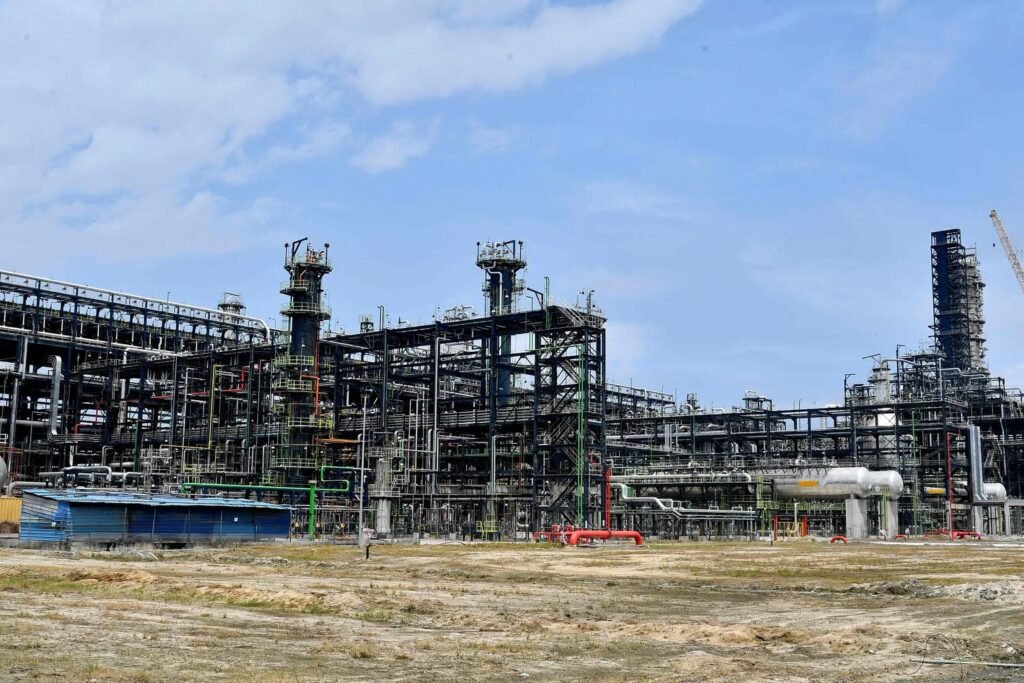
Nigeria could attract at least twice its current level of energy investment within five years as the country strengthens its relationship with the International Energy Agency, according to IEA Executive Director Fatih Birol.
Birol made the assessment during a visit to Abuja on Thursday, 3 September, two months after Nigeria formally joined the IEA as an Association country.
He said Nigeria’s oil, natural gas and renewable energy resources could attract significantly more capital at a time when governments and companies are reassessing global energy partnerships.
Birol told Reuters that his goal was to see the energy investment Nigeria receives at least double within five years. The figure is an ambition rather than a confirmed investment commitment, and no specific monetary value has been announced.
Nigeria’s relationship with the IEA is deepening
Nigeria formally joined the IEA family as an Association country in July after the agency’s Governing Board unanimously approved its admission.
The IEA said the move would deepen cooperation with Africa’s most populous country and strengthen Nigeria’s participation in international energy discussions.
Nigeria is a major oil and natural gas producer, while its market for decentralised solar energy is also growing.
However, the country continues to face major challenges in providing reliable and affordable electricity and clean cooking services to millions of people.
The IEA said when announcing Nigeria’s admission that closer cooperation would focus on energy security, economic growth and expanding access to energy.
Nigeria joined 13 other Association countries. The wider IEA family now represents more than 80% of global energy demand, compared with about 40% when the Association programme was created in 2015.
New programme will cover gas and electricity
Nigeria and the IEA are expected to deepen practical cooperation through a joint work programme.
According to Reuters, the programme is expected to cover natural gas, electrification, clean cooking, energy efficiency and improvements to energy data.
Better data could be particularly important for investors.
Birol said Nigeria would work with the agency to improve the collection and reporting of energy information, including statistics covering oil production, exports and consumption.
Reliable data helps investors understand the size of a market, identify risks and make decisions about where to commit capital.
The IEA and Nigeria already had a history of cooperation before the country’s admission as an Association member. The agency says the relationship dates back to 2014 and has included work on areas such as methane emissions.
Oil, gas and solar could attract investment
Birol believes Nigeria has opportunities across several parts of its energy industry.
Oil and gas remain central to the country’s economy, but renewable energy, particularly solar power, is becoming increasingly important.
Nigeria has one of Africa’s largest populations without reliable access to electricity, creating both a development challenge and a large potential market for new energy infrastructure.
The IEA has described Nigeria as one of the world’s fastest-growing markets for decentralised solar solutions.
At the same time, the Nigerian government is seeking to increase oil production substantially.
Reuters reports that the country aims to raise output to about three million barrels per day by 2030. Achieving that ambition will depend on investment, infrastructure improvements, energy-sector reforms and efforts to tackle oil theft and insecurity.
Global energy disruption could create an opening
Birol’s comments also reflect changes taking place beyond Nigeria.
Wars and disruption to major energy supply routes have forced governments to reconsider where they obtain oil, gas and refined petroleum products.
Birol said trust is becoming increasingly important as countries search for energy partners they can rely on.
Nigeria’s role has already become more visible in international fuel markets.
The IEA said in July that increased Nigerian fuel exports had helped strengthen resilience in African and international markets during recent periods of disruption.
Reuters has also reported that Nigerian jet fuel has been among the alternative supplies reaching Europe as disruptions in the Gulf affected established trade routes.
Birol said Nigeria’s combination of resources and changing global energy trade patterns could help the country attract investment from both governments and private companies.
Investment potential is not the same as investment secured
The prospect of doubling investment is significant, but it should not be confused with money already committed to Nigeria.
Birol’s five-year target depends on whether Nigeria can turn its energy potential into projects investors are prepared to finance.
Improved security, predictable regulation, reliable infrastructure and credible industry data will remain important.
Nigeria must also address its domestic energy needs while seeking a larger role in international markets.
That means attracting investment not only into oil production and exports, but also into electricity, gas infrastructure, clean cooking and renewable energy that can directly improve energy access.
Trivane View: The real test is whether investment reaches Nigerians
Doubling energy investment would be important for Nigeria, but the amount of money entering the sector should not be the only measure of success.
Nigeria is already one of the world’s major energy-producing countries, yet millions of people still struggle with unreliable electricity and limited access to clean cooking.
Closer cooperation with the IEA could help Nigeria improve planning, data and its ability to attract international capital.
The bigger test will be whether new investment translates into more reliable power, stronger infrastructure, jobs and affordable energy for households and businesses.
If Nigeria can combine its role as an international energy supplier with meaningful improvements at home, the benefits of deeper global energy cooperation will be much easier to measure.
Source: Reuters – IEA chief says Nigeria could double energy investment within five years
Facts first. Not frenzy.