
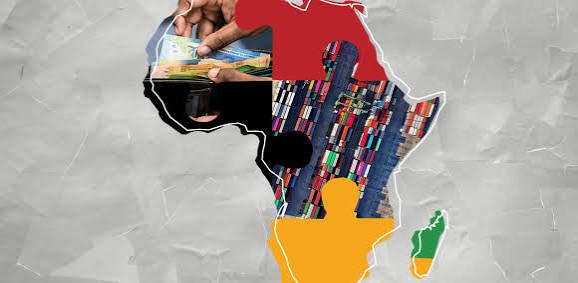
Africa has spent years building an ambitious continental free trade system. The bigger challenge now is making that system work for businesses trying to move goods, services and money across African borders.
A new World Bank report says Africa’s next major economic gains will depend less on signing additional trade agreements and more on removing the practical barriers that continue to keep neighbouring economies apart.
The report, Integrating Africa: From Threads to Hubs, was launched on 28 August by the World Bank Group alongside the African Union Commission and the United Nations Economic Commission for Africa.
It examines what needs to happen for the African Continental Free Trade Area, known as AfCFTA, to develop from a continental agreement into a functioning market capable of supporting production, investment and jobs.
Africa still trades more with the rest of the world
The scale of the challenge is significant.
The African Union says about 85% of Africa’s trade continues to take place with countries outside the continent. The World Bank also estimates that intra-regional trade accounts for roughly one-fifth of total exports from sub-Saharan Africa.
The composition of that trade is particularly important.
More than 60% of intra-African trade consists of manufactured goods, according to the African Union’s summary of the new report. This means stronger regional trade could help African economies retain more value through processing and manufacturing instead of depending heavily on exports of raw commodities.
Regional markets can also allow businesses to source materials in one African country, process or manufacture products in another and sell them across several markets.
The potential therefore goes beyond simply increasing the number of goods crossing borders.
Many barriers exist inside countries
Tariffs are only one part of the problem.
The World Bank estimates that around 60% of Africa’s trade costs arise from unilateral or behind-the-border barriers.
These include customs delays, inefficient logistics, transport restrictions, different product standards, restrictions on services and weak infrastructure.
For businesses, these problems can translate into longer journeys, repeated inspections, unpredictable border procedures and additional costs.
Customs systems in neighbouring countries may not communicate properly. Professional qualifications recognised in one market may not be accepted in another. Transport and financial services can also remain restricted across national borders.
The significance of the World Bank’s finding is that governments do not need to wait for another continental negotiation to address many of these problems.
Individual countries can improve customs administration, introduce electronic single windows, simplify rules of origin, strengthen standards systems and make freight markets more competitive.
Services could become a major opportunity
The report also identifies significant potential in services.
It estimates that deeper liberalisation of transport, telecommunications, financial and professional services could increase services trade within the AfCFTA area by about 60% to 64% by 2035.
Better services can also make trade in physical goods easier.
Reliable transport helps manufacturers reach customers. Efficient financial services allow businesses to make and receive cross-border payments. Digital networks help companies communicate and sell across markets, while professional services support investment and expansion.
This is why the report argues for systems that can work together across borders, including customs, payments, transport, energy, standards and digital infrastructure.
The challenge has shifted to implementation
AfCFTA has already provided the framework for a larger continental market.
The World Bank’s Ndiamé Diop said the focus must now be implementation, with African institutions, governments and businesses working to connect 54 economies into an integrated market of about 1.5 billion people.
The report sets out four broad priorities: building regional value chains, reducing trade and regulatory barriers, strengthening implementation of regional agreements and investing in shared infrastructure and systems.
Success would therefore need to be measured by practical improvements.
The World Bank points to shorter border-crossing times, lower logistics costs, more reliable infrastructure, fewer non-tariff barriers and greater participation by businesses in regional value chains as meaningful signs of progress.
Trivane View: The agreement is only the beginning
AfCFTA gave Africa an important framework. But businesses do not trade through agreements alone.
They need roads that work, borders that move efficiently, payment systems that connect and rules that remain predictable from one market to another.
That is why the next stage of African integration may be harder than signing the agreement itself.
The real measure of AfCFTA’s success will not be the number of commitments governments make. It will be whether an African business can produce in one country, sell in another and move goods, services and money across the continent without unnecessary cost and delay.
Making that possible would turn continental integration from a political ambition into something African businesses and consumers can experience in everyday economic life.
Source: World Bank – What’s Next for Africa’s Integration Agenda
Facts first. Not frenzy.