
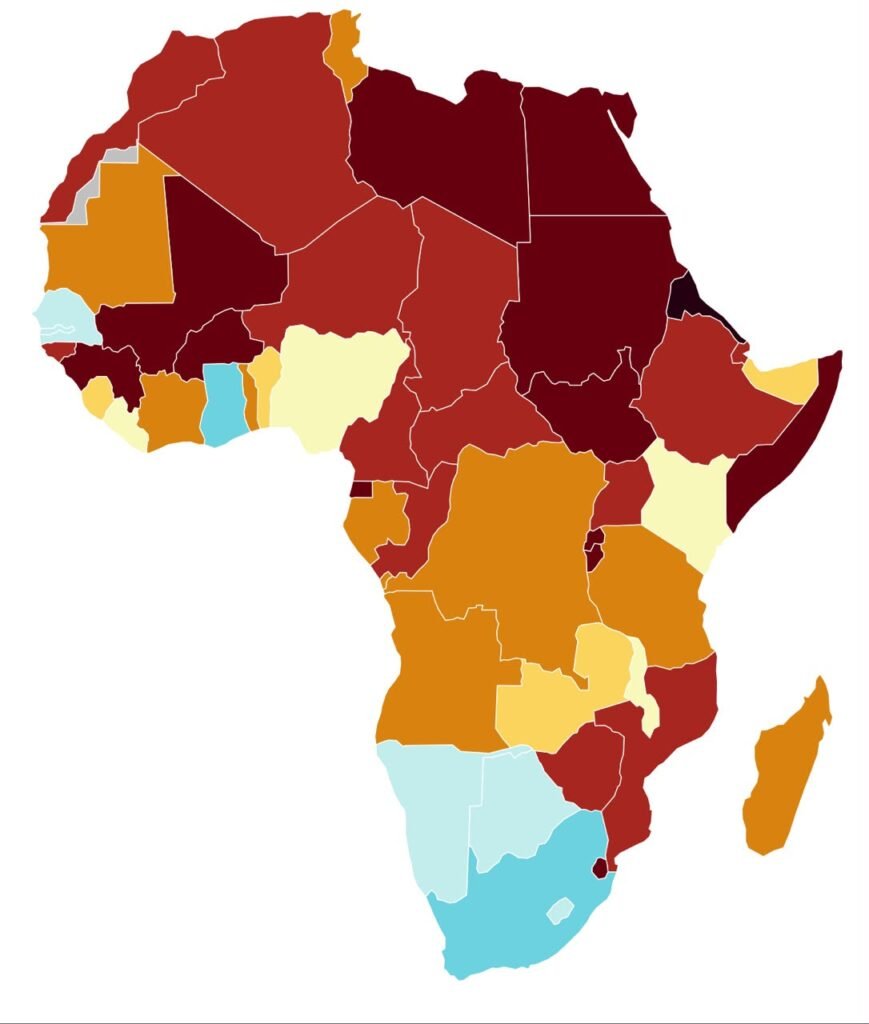
Africa is moving through a busy election year, with voters in several countries choosing presidents, lawmakers and other representatives.
But the bigger story of 2026 is not simply about who wins or loses. Across the continent, elections are testing the institutions that make democracy work — electoral commissions, courts, political parties, security agencies, the media and civil society.
The experiences have differed sharply from one country to another. That difference matters because there is no single story of democracy in Africa.
Uganda: An election followed by controversy
Uganda held its general election on 15 January. President Yoweri Museveni, who has ruled the country since 1986, was declared the winner with nearly 72% of the presidential vote, defeating his main challenger, Robert Kyagulanyi, widely known as Bobi Wine.
The result extended Museveni’s rule into a fifth decade, but the election was followed by controversy.
Internet access was restricted around the vote, while Wine rejected the result and alleged widespread irregularities. Ugandan authorities disputed accusations that the election had been manipulated.
The period surrounding the election also brought concerns about the treatment of opposition supporters and the conduct of security forces.
Uganda’s experience underlines a wider issue. The credibility of an election is not determined only by what happens at polling stations. Voters also need access to information, candidates need space to campaign, and disputes must be handled through institutions people can trust.
Benin: When the rules shape the contest
Benin held its presidential election on 12 April, with Romuald Wadagni emerging as the winner and succeeding Patrice Talon.
The Constitutional Court confirmed Wadagni with 94.27% of valid votes, while Paul Hounkpè received 5.73%.
Voting itself was peaceful, but questions about political competition had emerged before election day.
The main opposition party, The Democrats, was unable to field its preferred candidate after failing to meet sponsorship requirements under the country’s electoral rules.
Supporters of the process argued that every candidate had to satisfy the law. Critics said the requirements reduced meaningful competition.
The Benin election showed why electoral rules matter. A credible election is not only about counting ballots correctly. The conditions under which candidates are allowed to enter the race can also shape public confidence in the final result.
Guinea-Bissau: When an election cannot reach its conclusion
Guinea-Bissau faced a more serious disruption.
Presidential and legislative elections were held in November 2025, but the military seized power before final results could be announced. Electoral officials later said important election materials had been destroyed or seized, making it impossible to complete the process.
The country entered a military-led transition, with presidential and legislative elections planned for December 2026.
The crisis shows how fragile elections can become when democratic institutions cannot protect the process from political or military interference.
Casting a ballot matters, but so does the ability of institutions to count those votes, resolve disputes and ensure that the lawful outcome is respected.
More elections are shaping the year
The continent’s electoral calendar has remained active.
Cabo Verde held parliamentary elections in May and is due to hold a presidential election in November. Ethiopia also held general elections in June, while Morocco is scheduled to hold a general election in September.
Although these countries have different political systems and histories, similar questions run through their elections: Can citizens participate freely? Are electoral institutions independent? Is the process transparent? And will political actors accept lawful outcomes?
Technology is changing elections
Technology has also become part of Africa’s electoral debate.
Candidates increasingly use social media to communicate directly with voters, while journalists and civil society organisations rely on digital platforms to monitor campaigns, share information and document events.
At the same time, internet restrictions during elections have raised concerns about access to information.
Governments may cite security or public-order concerns when restricting connectivity. Critics argue that shutdowns can also make independent scrutiny harder at the very moment when transparency matters most.
As internet use grows across Africa, digital freedom is becoming increasingly connected to electoral credibility.
Strong institutions remain the real test
Regional bodies such as the African Union, ECOWAS and SADC regularly observe elections and promote constitutional government. But their influence has limits.
National institutions still organise elections, settle disputes and enforce constitutional rules. That makes independent electoral bodies, credible courts, professional security agencies, a free media and active civil society essential.
The lesson emerging from 2026 is therefore bigger than any single result.
A peaceful election day is important, but democracy begins before voters reach the polling station and continues after they leave. Who can contest, whether candidates can campaign freely, whether citizens have access to information, how votes are counted and whether lawful results are respected all matter.
Africa’s democratic future will not be decided by one election or one country. It will depend on whether institutions across the continent can earn public trust and protect the right of citizens to choose their leaders.
Sources: International IDEA; African Union; national electoral authorities; ECOWAS; Reuters
Facts first. Not frenzy.