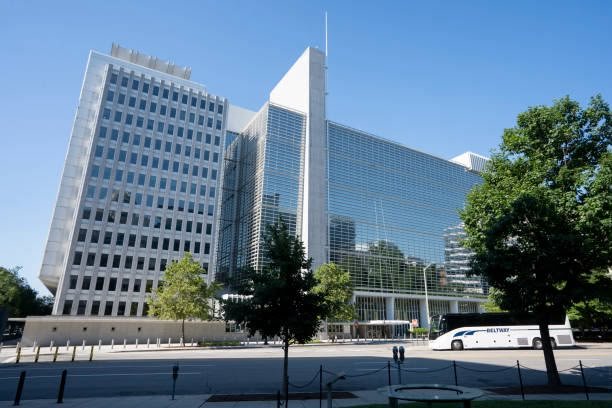
Nigeria has secured a major new financial commitment from the World Bank, tied to reforms and a six-year strategy that will shape borrowing and delivery until 2032.
On Wednesday July 1, 2026, the World Bank Group endorsed a new Country Partnership Framework covering 2026 to 2032 and approved a $1.25 billion financing package called the Nigeria Actions for Investment and Jobs Acceleration Development Policy Financing, shortened to NAIJA DPF.
Together they represent the Bank’s most comprehensive commitment to Nigeria in years.
They arrived as Nigeria’s external debt crossed $51.86 billion, according to Debt Management Office data published in April 2026.
What the money is for
The NAIJA DPF is not general budget support. It is policy-based financing, meaning disbursement is linked to reforms Nigeria must implement.
According to the Bank’s summary, those reforms target expanding access to finance, improving electricity supply, strengthening digital services, deepening agricultural productivity, and enhancing tax and trade competitiveness.
In practical terms: deepening capital markets to attract private investment, modernising digital economy regulation and e-governance, advancing power sector reform, lowering trade barriers in line with ECOWAS and AfCFTA commitments, improving access to quality seeds, and raising domestic revenue mobilisation.
The six-year plan promisesThe 2026-2032 framework, set targets: electricity access for 32 million people, broadband for 58 million, improved health and nutrition services for 40 million, and support for 9.5 million farmers.
World Bank Country Director for Nigeria, Mathew Verghis, said the framework focuses on creating more and better jobs by unlocking private sector-led growth, while acknowledging that stabilisation efforts must translate into better living standards — a gap he said requires sustaining reforms and addressing structural constraints.
. Nigeria’s external debt stood at $51.86 billion as of December 31, 2025, with World Bank loans accounting for 38.36% of that stock.
The Bank’s total exposure to Nigeria is $19.89 billion.
Between June 2023 and May 2026, the Bank approved about $9.35 billion for Nigeria. With the new $1.25 billion, total commitments under the Tinubu administration approach $10.6 billion. If fully disbursed, the new facility would push external debt to about $53.11 billion.
The Bank’s willingness to lend reflects confidence in recent reforms -fuel subsidy removal, exchange rate unification, fiscal consolidation – which have improved growth, revenues and reserves. What those gains have not yet produced is broad improvement in household costs.
Nigeria is West Africa’s largest economy. A Nigeria that delivers power, broadband, food security and jobs is a stabilising anchor for the region. A Nigeria that borrows at scale without visible delivery adds to a pattern that erodes trust in both government and international partners.
This is a serious, long-term bet by the World Bank. The conditions address real barriers to growth. But Nigerians should ask the questions press releases do not answer.
Who is directly responsible for delivering the 32 million electricity and 58 million broadband targets? What public dashboard will track progress? What happens if reform conditions are missed? And how will future debt service be managed as exposure approaches $20 billion?
The approval was written in July 2026. The real story will be written in bills, yields, speeds and jobs between now and 2032.
Trivane News will track it against the announcement.