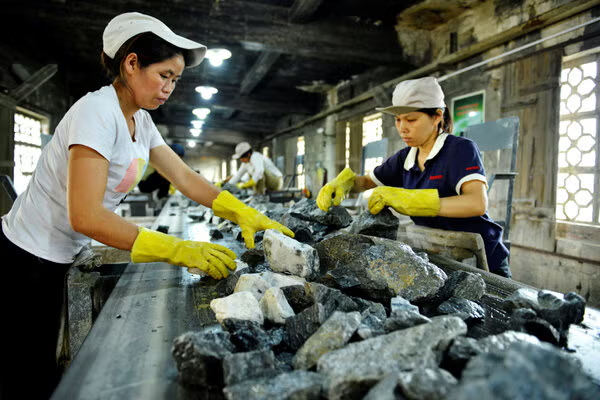
China has extended the suspension of selected export restrictions on critical minerals and other dual-use materials destined for the United States until January 27, 2027, providing additional relief amid efforts by the world’s two largest economies to maintain their trade truce.
The Chinese Ministry of Commerce announced on Tuesday, November 24, that the suspension would run from November 28, 2026, to January 27, 2027. The measures had originally been scheduled to expire on November 27.
The extension covers certain dual-use items associated with gallium, germanium, antimony and superhard materials, as well as stricter reviews of the end users and intended uses of graphite shipments to the United States.
According to Reuters” the decision continues a series of measures aimed at easing trade tensions between Beijing and Washington.

Critical minerals at the centre of trade tensions
The materials affected are important to several strategic industries.
Gallium and germanium are used in semiconductor manufacturing, advanced electronics, fibre-optic cables and infrared technology. Antimony is used in batteries, industrial applications and military equipment, while graphite is a major component of electric-vehicle batteries.
China holds a dominant position in the global supply of several of these materials, giving Beijing considerable influence over industries that depend on them.
The restrictions were introduced amid escalating tensions over technology exports and US measures targeting China’s semiconductor industry. Beijing subsequently imposed tighter controls on selected dual-use materials, including restrictions specifically targeting the United States.
The extension therefore offers temporary relief to American manufacturers and other businesses that depend on these materials.
Not a complete removal of export controls.
The latest decision does not mean China has completely removed its restrictions on critical minerals.
It suspends a specific part of its earlier export-control announcement. Restrictions involving exports of relevant dual-use items to US military users or for military purposes remain in place.
The distinction is important because exporters must still comply with applicable licensing and end-use requirements.
“South China Morning Post” reported that the extension forms part of a broader easing of selected trade restrictions between the two countries.
A fragile trade relationship
The announcement comes as Washington and Beijing continue efforts to manage disagreements over tariffs, technology, and access to strategic materials.
Although the latest extension provides additional time for negotiations, it does not resolve the wider disputes surrounding semiconductor exports and control of critical mineral supply chains.
For businesses, the additional two months offer greater certainty over some shipments, but the possibility of renewed restrictions remains a concern.
The next phase of US-China trade negotiations will be important in determining whether the temporary suspension can be extended or replaced with a more lasting arrangement.