What Do the Latest Figures Show?
Formal remittance inflows into Nigeria rose sharply during the first six months of 2026, offering fresh evidence of the growing importance of overseas money transfers to households and the foreign-exchange market.
Figures attributed to the Central Bank of Nigeria show that inflows through International Money Transfer Operators reached about $2.85 billion between January and June, compared with $2.07 billion in the corresponding period of 2025. BusinessDay reported a year-on-year increase of approximately 38.2%.
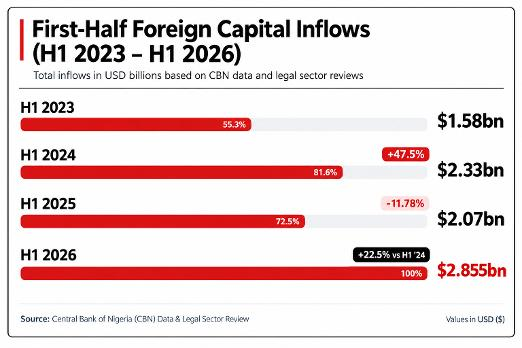
A separate BusinessDay analysis calculated the increase at 38.16%, or about $788.5 million, and described the total as the highest first-half figure across seven years of available data. The small percentage difference reflects rounding, not conflicting totals.
Does This Mean Nigerians Sent More Overall?
The data track transfers through formal money-transfer operators. They do not capture every possible transfer, such as informal cash arrangements or transactions outside the measured channels. An increase in officially recorded inflows could therefore reflect both greater sending activity and more transfers moving into regulated systems.
That distinction matters when interpreting the figures. It would be inaccurate to say the data alone prove that every diaspora household is remitting more or that informal transfers have disappeared.
For recipients, money sent from abroad can help cover school fees, rent, healthcare, food, and business costs. For the wider economy, the recorded inflows represent a source of foreign currency, although their impact on exchange rates depends on broader market conditions and policy decisions.

How Does This Affect the Naira?
The same foreign-exchange report said the naira had gained about 7.29% against the dollar from the beginning of 2026 to 20 October in the official market, with the dollar quoted around ₦1,333.65 on Tuesday.
The coincidence of higher remittances and a stronger currency does not establish that remittances alone caused the appreciation. Oil receipts, investment flows, central-bank policy, demand for foreign currency, and external reserves may all influence the exchange rate.
For diaspora senders, the practical question is how much a recipient actually receives after transfer fees and currency conversion. A favourable headline exchange rate may not be the rate offered by a particular provider, and charges can vary across platforms and payment methods.
What Is NiDCOM Saying About Investment?
The Nigerians in Diaspora Commission has also highlighted the contribution of Nigerians overseas to domestic businesses. In reporting published on 21 October, the commission praised investment in healthcare, agriculture, food processing and information technology.
NiDCOM described monthly diaspora inflows as approaching $1 billion, but that statement should not be confused with the CBN’s $2.85 billion first-half total for a specific formal-transfer measure. The figures refer to different descriptions and may not be directly comparable without methodology.
The commission cited diaspora engagement initiatives, including investment events in Nigeria and Canada. Those initiatives indicate efforts to channel financial and professional links into enterprises, but the scale of new investments attributable to them has not been independently established in the reports reviewed.
What Happens Next?
Further CBN releases will show whether formal inflows maintain their pace in the second half of 2026. Analysts will also watch transfer costs, exchange-rate conditions, and whether diaspora investment claims translate into measurable business activity.
Related Story
Read Trivane’s coverage of UK–Nigeria migration commitments