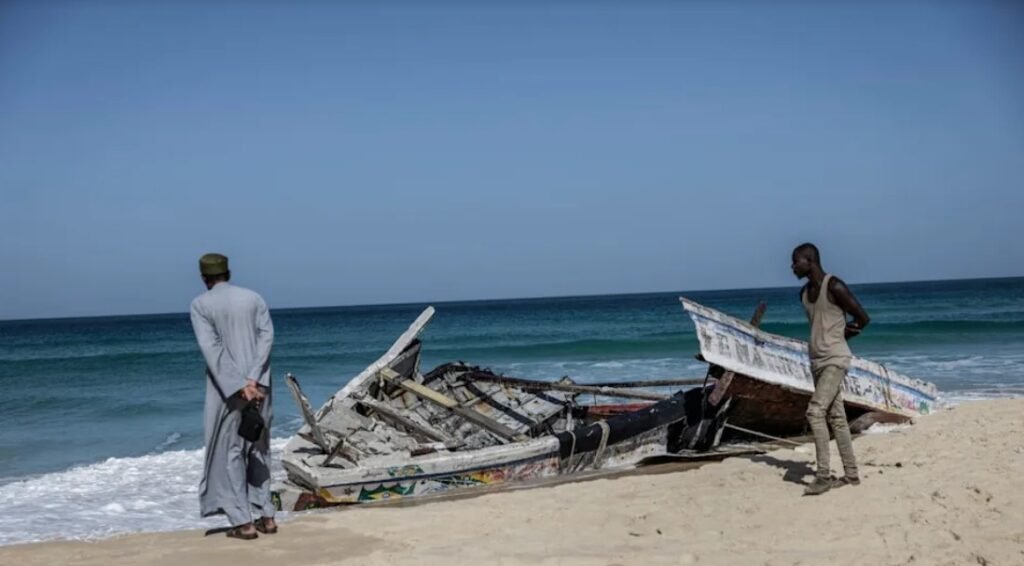
At least 39 people have died after a boat carrying migrants capsized off the coast of Senegal while travelling towards Spain, according to the country’s emergency services.
The vessel overturned on Sunday, November 8, off the coast of Kébémer, a town north of the capital, Dakar. It had departed from Saint-Louis in northern Senegal and was heading towards the Spanish coast.
A report by the “Associated Press published on November 9″ said the death toll increased to 39 after rescuers recovered additional bodies on Monday.
Only one passenger has been rescued alive, while authorities believe several others may still be missing. The government has not disclosed how many people were aboard the boat.

Search efforts and government response
Senegal’s Interior Ministry initially reported 21 deaths and one survivor in a statement issued on November 8, saying rescue teams had been mobilised to search for possible survivors and assist affected families.
The ministry also confirmed that the Interior Minister would visit the affected area on Monday to express the government’s solidarity with victims’ families.
In a separate update, the “Senegalese Press Agency (APS)” reported on November 8 that the death toll had reached 34 following the recovery of additional bodies.
President Bassirou Diomaye Faye expressed condolences to the victims’ families and pledged to intensify efforts against networks organising dangerous irregular migration journeys.
The government also reaffirmed its commitment to working with neighbouring countries to combat human-smuggling networks and improve opportunities for young people at home.
The dangers of the Atlantic migration route
The journey from West Africa towards Spain’s Canary Islands is one of the most dangerous migration routes in the world. Migrants often undertake the crossing in overcrowded, uncovered wooden boats, commonly known as pirogues, travelling hundreds of miles across the Atlantic Ocean.
According to figures cited by the Associated Press from the migrant rights organisation Walking Borders, at least 635 people died during the Atlantic crossing in the first five months of 2026.
Unemployment, poverty, and limited economic opportunities continue to influence the decision of many young people to attempt the journey, despite the risks of drowning, extreme weather, and being stranded at sea.
The latest tragedy adds to concerns about the human cost of irregular migration and the effectiveness of measures intended to prevent dangerous departures.
A continuing challenge for West Africa
Although Senegal has pledged to tackle smuggling networks and strengthen regional cooperation, the latest disaster highlights the difficulty of preventing people from risking their lives in search of opportunities abroad.
Addressing the crisis will require more than intercepting boats and prosecuting those who organise crossings. Sustainable employment, improved economic prospects, and stronger protection for vulnerable people are also important parts of a lasting response.
With search operations continuing and the number of passengers still unknown, the full scale of the latest disaster may yet become clearer.