
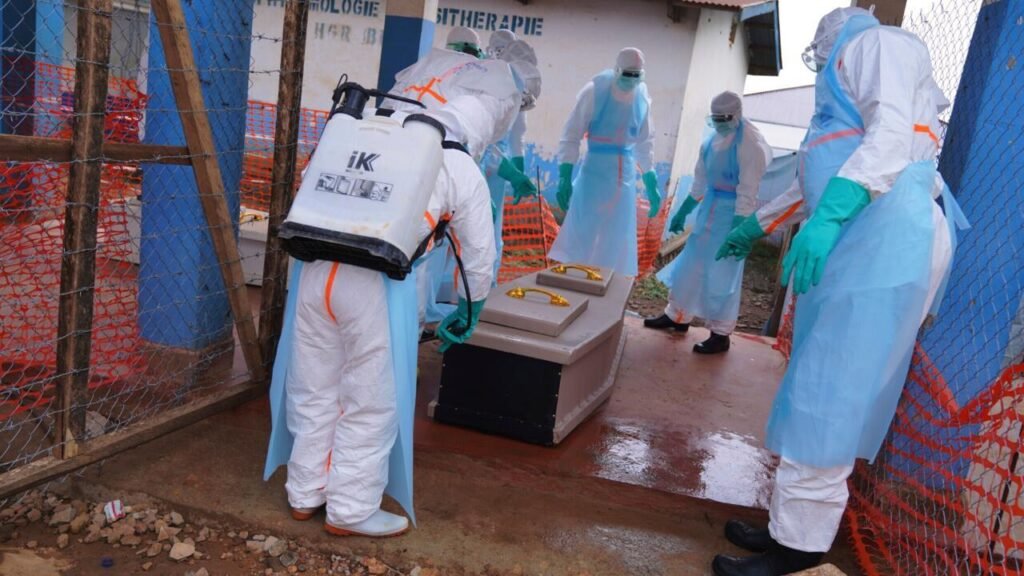
The Ebola outbreak in the Democratic Republic of the Congo has killed more than 3,000 people, making it the largest and deadliest outbreak of the disease in the country’s history.
Government figures released on Wednesday showed that 3,007 people had died and 6,186 confirmed cases had been recorded.
The outbreak has spread across six provinces despite efforts by Congolese authorities, the World Health Organization and aid groups to bring transmission under control.
The epidemic is caused by the Bundibugyo species of Ebola virus, which currently has no approved specific vaccine or treatment. Researchers are testing possible vaccines and treatments as the health response continues.
DR Congo’s deadliest Ebola outbreak
The current epidemic has now surpassed the country’s 2018 to 2020 outbreak, which killed nearly 2,300 people.
That makes it the worst Ebola outbreak DR Congo has experienced since the virus was first identified in the country in 1976.
Globally, the current outbreak is now second only to the devastating 2014 to 2016 West African Ebola epidemic, which infected more than 28,600 people and killed more than 11,000, mainly in Guinea, Liberia and Sierra Leone.
The latest Congolese outbreak was formally declared in Ituri province on 15 May 2026, although health officials and experts believe transmission may have started as early as January.
Since then, the virus has spread beyond its original epicentre and is now affecting six provinces.
Why the outbreak remains difficult to control
Ebola spreads through direct contact with the bodily fluids of an infected person or through contaminated materials.
Finding infected people quickly, isolating them and tracing everyone they have been in contact with are therefore central to stopping transmission.
But those measures have proved difficult in parts of eastern DR Congo.
Weak disease surveillance, insecurity and resistance within some communities have made it harder for health teams to identify cases early and break transmission chains.
WHO Director-General Tedros Adhanom Ghebreyesus warned on Wednesday that health authorities still do not know about every chain of transmission.
Many people who have died were not previously identified as contacts of known Ebola patients, suggesting that cases are continuing to spread undetected.
Unsafe burials are also contributing to transmission.
Deaths outside treatment centres raise concern
One of the most troubling indicators is where Ebola patients are dying.
The WHO estimates that about 60% of deaths are occurring outside treatment centres.
That matters because people who die before reaching specialised care may have already exposed relatives and other members of their communities.
It can also make contact tracing more difficult.
The figure highlights a wider problem facing the response: containing Ebola requires more than treatment beds. Authorities must identify infections early enough to prevent patients from unknowingly transmitting the virus.
Vaccines and treatments are being studied
There is currently no approved vaccine or virus-specific treatment for Bundibugyo Ebola, but research is moving forward.
Congolese authorities have started vaccinating frontline health workers with the Ervebo vaccine, which is licensed against the Zaire species of Ebola.
Whether it can effectively protect people against Bundibugyo Ebola has not yet been established.
WHO says potential Bundibugyo vaccines are undergoing trials, with efficacy studies in DR Congo expected to begin in October or November.
More than 300 Ebola patients have also been enrolled in trials of potential treatments.
This distinction is important. The absence of an approved Bundibugyo vaccine does not mean health authorities have no tools available, but the scientific options remain more limited than they are for some other forms of Ebola.
Why neighbouring countries are watching
The outbreak is concentrated in a region where people regularly move between communities and across national borders.
That makes controlling transmission important not only for DR Congo but for neighbouring countries and the wider region.
Tedros warned that until every transmission chain is identified and broken, the epidemic will continue to pose a threat to DR Congo and its neighbours.
The outbreak is also unfolding in areas already affected by insecurity, displacement and pressure on health services, making an effective response more difficult.
The Trivane angle: the numbers tell only part of the story
Passing 3,000 deaths is a devastating milestone, but the deeper concern is what the figure says about the struggle to stop transmission.
Months after the outbreak was declared, health authorities are still discovering cases outside known contact networks. Many patients are dying before reaching treatment centres, while insecurity and mistrust continue to complicate the response.
The central challenge is therefore not simply treating those already infected.
It is finding infections earlier, earning the trust of affected communities and breaking every remaining chain of transmission.
Until that happens, the death toll risks becoming another milestone rather than the beginning of the outbreak’s decline.
Source: Reuters, 2 September 2026
Read the Reuters report
Facts first. Not frenzy.