
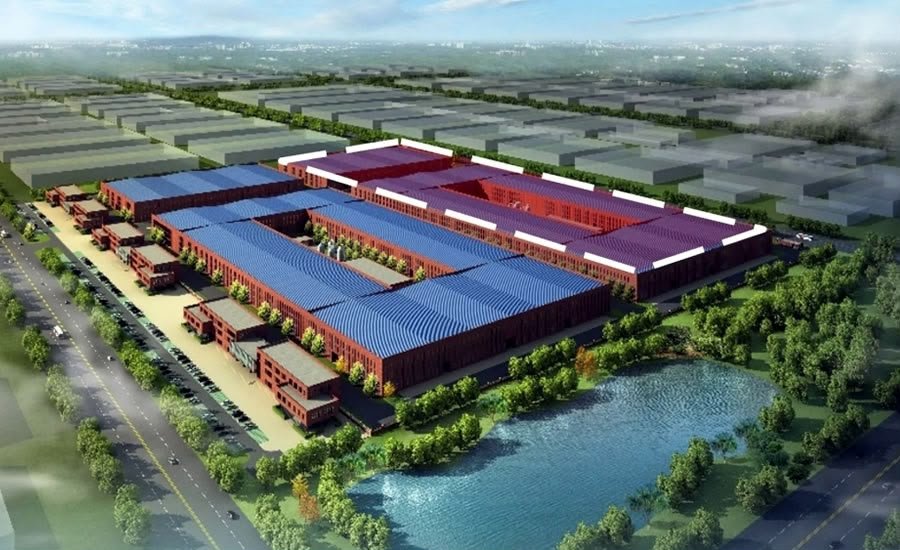
The African Development Bank (AfDB) has approved a €100 million loan to support construction of Africa’s first electric vehicle (EV) battery gigafactory in Morocco, marking a major milestone in the continent’s clean-energy industrial development.
The project, led by Chinese battery manufacturer Gotion High-Tech, will be built in the Atlantic Free Zone in Kénitra, in Morocco’s Rabat-Salé-Kénitra region. Total investment is estimated at US$1.3 billion, with the factory designed to produce lithium iron phosphate (LFP) battery cells for electric vehicles.
What the factory will produce
Unlike many African mining projects that export raw minerals for processing overseas, the Morocco facility is expected to cover much of the battery manufacturing process—from cathode materials to finished battery cells.
LFP batteries are widely used in electric vehicles because they are considered safer, longer-lasting and more cost-effective than many alternative battery chemistries.
The factory is expected to begin with 10 gigawatt-hours (GWh) of annual production capacity in Phase One, with long-term plans to expand to 100 GWh, positioning Morocco among emerging global battery manufacturing hubs.
Financing and economic impact
The AfDB Board approved the €100 million financing package on 24 July 2026.
The Bank also plans to mobilise up to an additional €141 million from development finance partners under its New African Financial Architecture for Development (NAFAD) initiative.
Phase One is expected to create more than 600 direct jobs, while increasing Morocco’s local industrial integration rate to approximately 70%, strengthening domestic manufacturing capacity and supply chains.
Why Morocco?
Morocco has spent more than a decade developing itself into one of Africa’s leading automotive manufacturing centres.
The country already hosts major vehicle manufacturers including Renault and Stellantis, alongside hundreds of automotive suppliers. Its location close to European markets and established export infrastructure makes it an attractive base for battery production.
AfDB Country Manager for Morocco Achraf Tarsim said the project would strengthen Morocco’s industrial competitiveness while supporting the development of an African battery and electric vehicle ecosystem.
Africa’s wider opportunity
The project highlights a broader opportunity for Africa.
The continent possesses many of the world’s critical minerals—including cobalt, lithium, manganese and graphite—but much of that wealth is still exported as raw materials before being processed abroad.
Developing battery manufacturing capacity within Africa could enable more value to be retained on the continent through industrial production, skilled employment and technology transfer.
If successful, Morocco’s gigafactory could provide a model for similar investments in other African countries.
What it means for the diaspora
Growing investment in Africa’s clean-energy manufacturing sector could create new opportunities for African professionals in engineering, finance, technology and advanced manufacturing.
As Europe accelerates its transition to electric vehicles, projects like Morocco’s battery plant may strengthen industrial links between Africa and global markets while encouraging greater investment across the continent.
Trivane View
Africa’s competitive advantage should not end with exporting raw minerals. Building factories that manufacture higher-value products is essential if the continent is to capture more of the economic benefits of the global clean-energy transition. Morocco’s gigafactory represents an important first step—but sustained investment, stable policies and stronger regional supply chains will determine whether it becomes the beginning of a broader African industrial transformation.
Sources: African Development Bank (AfDB); Gotion High-Tech; Associated Press (AP); Morocco World News; Energy Storage News; Construction Review Online.
Trivane News
Facts first. Not frenzy.