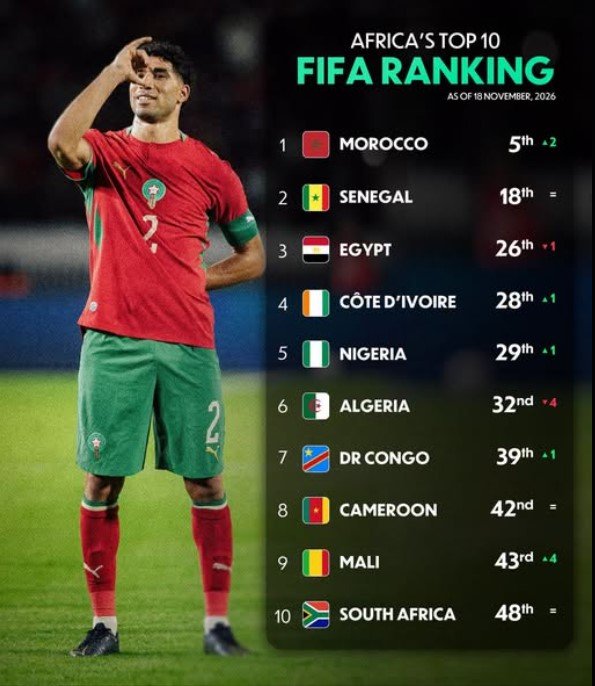
PUNCH reported the central development. Morocco have risen two places to fifth in the latest FIFA men’s world rankings, matching the highest position previously achieved by an African national side, Nigeria. PUNCH reported the ranking change on Thursday, 19 November. Nigeria’s Super Eagles also climbed to 29th in the world and fifth on the continent. Rankings are based on an accumulated assessment of international results and do not themselves award a trophy or qualify a side for a tournament. They nevertheless offer a useful indicator of recent performance across different opponents and competitions, making Morocco’s advance a notable marker for African football.
Why Rankings Matter
A high ranking can shape public expectations, influence perceptions of teams during international windows, and sometimes affect seeding arrangements where organisers use official rankings. It should not be confused with a prediction that a side will win its next match. Results depend on injuries, player availability, coaching decisions, opposition tactics, and match conditions. Morocco’s standing reflects a period of competitive progress, while Nigeria’s position illustrates the continued importance of Africa’s established football nations. Comparisons across eras also require care because ranking calculations and competition formats have changed over time.

Nigeria’s Position in Context
The Super Eagles’ climb to 29th offers a positive numerical movement but cannot settle questions about the team’s recent performances or qualification prospects. Coaches must still address chance creation, defensive organisation, player fitness, and continuity between international windows. Nigeria’s international reputation rests on a long history of talented players and major continental performances, yet current success must be earned in each fixture. For supporters, the ranking is one measure among many. Results against direct rivals, consistency in competitive fixtures, and the ability to handle pressure in decisive matches provide other useful measures of progress.
The Wider African Picture
Morocco’s rise shows that African teams can occupy a place among football’s highest-ranked nations, but the depth of the continent’s talent extends beyond the teams near the top. Domestic leagues, youth academies, national-team management, and access to high-quality preparation influence how well that talent translates into international results. Countries that invest over multiple cycles may improve their competitiveness even when immediate results fluctuate. A ranking update provides a snapshot of relative standing; sustained progress demands administrative stability and strong development systems. The challenge for national associations is turning notable milestones into durable structures.
Beyond the League Table
Supporters should also distinguish between the ranking points earned through international fixtures and the governance challenges that can shape future results. The strongest football systems align youth development, domestic competition, coaching, and medical preparation with clear national-team priorities. A strong placement is an opportunity to attract support, but maintaining it requires long-term planning. Nigeria and Morocco will ultimately be judged by tournament performances as well as their places in a periodically updated table.
Comparing Teams Responsibly
The men’s ranking is intended to compare current international results, but it cannot capture every difference in squad depth or tournament performance. A team may rise because of strong results in a short period, while another remains competitive despite fewer opportunities for high-value fixtures. Coaches and analysts therefore examine performance data, opponent quality, and tactical consistency alongside the numerical table. For fans, the ranking is a starting point for conversation, not a verdict on individual players or managers.
Next International Tests
Future matches will determine whether Morocco consolidate their position and whether Nigeria can climb further. FIFA rankings respond to results over time, meaning a single triumph or setback usually needs context before sweeping judgments are made. Fans and administrators can celebrate the new numbers without treating them as proof of superiority in every head-to-head contest. For Nigeria, particular attention will remain on competitive fixtures and the federation’s ability to support the coaching staff and players. For Morocco, the focus will be maintaining standards amid greater expectations from opponents and supporters.
What Readers Should Watch
An African side reaching the global top five has symbolic importance for the continent, but rankings can change rapidly when new competitive fixtures are played. Countries can learn from each other’s approaches to preparation, player pathways, and administration without assuming that one team’s success offers a simple formula. For Nigerian fans, the new ranking provides a reference point ahead of future assignments, not a substitute for improvement on the pitch. Long-term development depends on decisions made between international windows, not only the celebrations that follow a ranking announcement or a high-profile victory.
Related Trivane News
Super Eagles Face Tanzania in Zanzibar as AFCON Qualification Pressure Builds