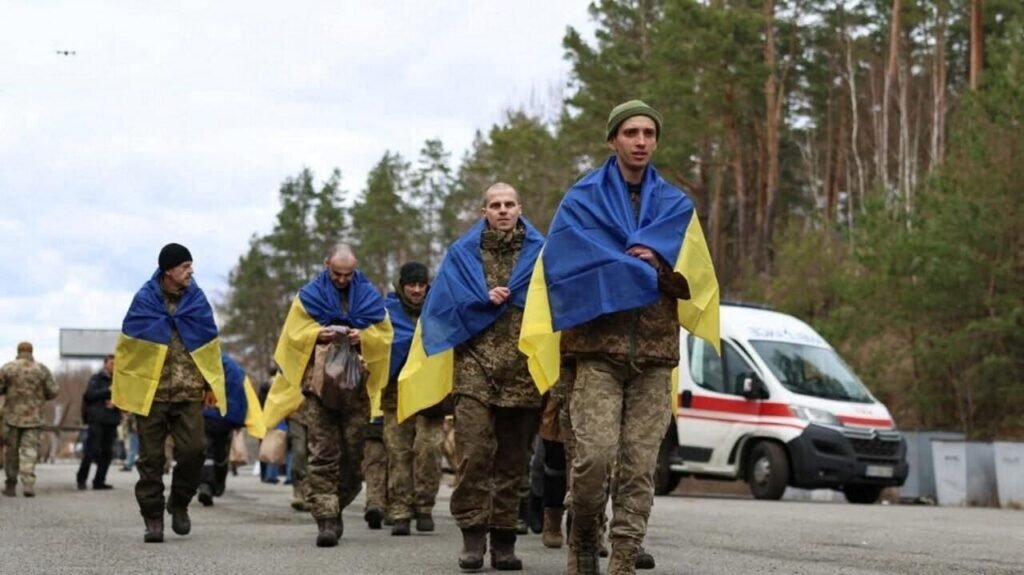
Russia and Ukraine have exchanged 270 people each in a new prisoner swap, offering relief to hundreds of families as the war between the two countries continues.
The exchange took place on Friday, October 23, following talks involving US negotiators earlier in the week. Ukrainian President Volodymyr Zelenskyy confirmed that 270 Ukrainians had returned home, while Russia’s Defence Ministry announced the return of the same number of Russian servicemen.
According to a Reuters report on the exchange”, nine civilians were among those returning to Ukraine. Most of the Ukrainian servicemen had been held since Russia launched its full-scale invasion in February 2022.

Former Prisoners Receive Medical Support
The released Ukrainian personnel include members of several military and security formations. Zelenskyy said the returnees included people who had defended Mariupol and other parts of the country during the conflict.
Among those returning were five Ukrainians previously believed to have died in the July 2022 attack on the Olenivka prison camp in Russian-occupied territory. Dozens of Ukrainian prisoners died in that incident. Kyiv accused Moscow of responsibility, while Russia blamed Ukraine for the strike.
Russia’s Defence Ministry said its returning servicemen were in neighbouring Belarus, where they would receive medical and psychological assistance before being transported to Russia for further treatment.
One of the Few Remaining Areas of Cooperation
Prisoner exchanges have remained one of the few channels of cooperation between Moscow and Kyiv since the full-scale invasion began in 2022. Although the two countries remain divided over the war and its possible settlement, previous exchanges have enabled thousands of people to return from captivity.
The latest agreement follows diplomatic engagement involving US negotiators, although the exchange itself does not indicate that a wider peace agreement has been reached.
“Associated Press coverage” also reported the exchange amid continuing developments in the war, including Russia’s decision to send a shipment of diesel to the United States.
For the families of those released, the immediate significance is more personal: relatives who have spent months or years waiting for news can begin the process of reunion and recovery.