More than 500 people have fallen ill in two South African cities amid a gastrointestinal illness outbreak linked to poor water quality, prompting emergency responses and renewed scrutiny of the country’s water infrastructure.
The largest cluster has been recorded in Bronkhorstspruit and surrounding communities in the City of Tshwane, east of Pretoria. A separate cluster has affected students in Gqeberha, where authorities are investigating suspected links to unsafe water.
According to the “Associated Press“, the combined number of people affected across the two locations exceeded 500 as of October 21.
Hundreds Affected by Unchlorinated Water
South African government departments reported 408 cases of gastrointestinal illness in Tshwane’s Region 7 between October 7 and 18. Most of those affected were children under four, and no deaths had been reported in that cluster as of the government’s October 19 update.
Investigations linked the illnesses to contaminated water from the Bronkhorstspruit Water Treatment Works. The plant supplied water without chlorination between September 24 and October 14 after the City of Tshwane experienced difficulties with its chlorine supplier.
Testing by the National Institute for Communicable Diseases detected norovirus, Campylobacter, and Shigella in three of four patient stool specimens analysed. Water testing also found extremely high levels of E. coli and total coliforms in samples from the treatment plant and nearby reservoirs.
The joint statement from the “South African government” said the findings indicated that exposure to contaminated water had caused the illnesses. No cholera bacteria were found in the sampled stools.
Residents Warned Against Using Tap Water
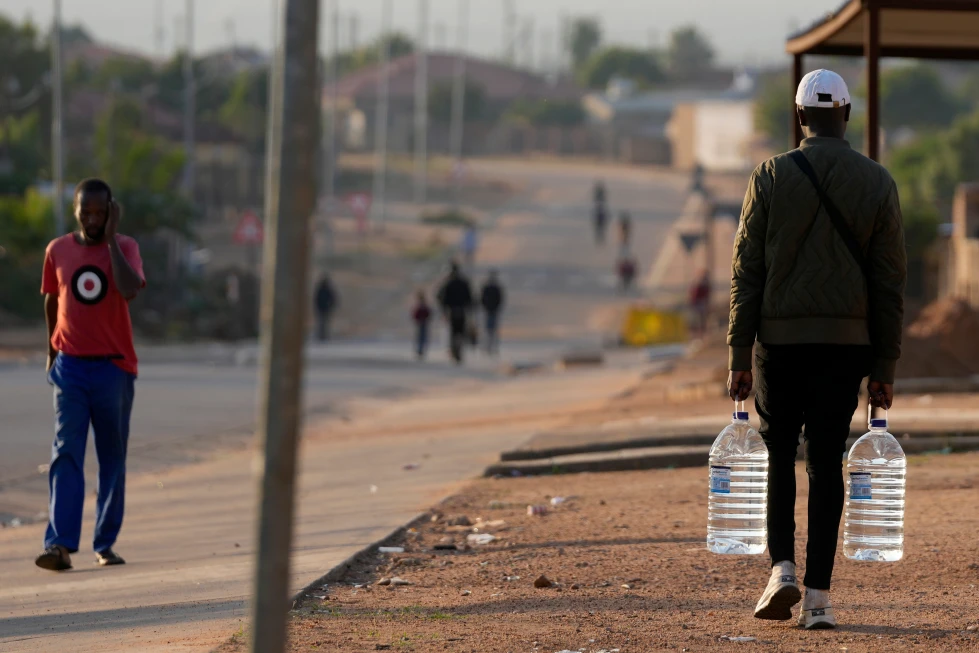
Authorities warned affected communities not to drink the tap water or use it for cooking, washing, or bathing, even after boiling. Residents were advised that it could be used only for flushing toilets while the situation remained unresolved.
Emergency water supplies were distributed to affected communities as officials continued investigations and additional testing.
The water contamination has also raised questions about the municipality’s handling of the incident. The government said residents had not been adequately warned that the water was unsafe.
An independent investigation has been commissioned to examine how contaminated water entered the supply system and why chlorination was interrupted. Further laboratory tests are intended to establish whether other harmful contaminants are present.
Separate Illness Cluster in Gqeberha
More than 100 students at Rhodes University in Gqeberha, in the Eastern Cape, were also treated for gastrointestinal symptoms, according to AP reporting.
Authorities and the university were investigating the possible source of the illnesses. The two clusters should not automatically be treated as one outbreak, as a common source linking the incidents has not been established.
The combined number of cases nonetheless highlights the public-health risks posed by unsafe water and the need for reliable monitoring and rapid communication when contamination is suspected.
Water Infrastructure Under Scrutiny
South Africa has faced recurring water and sanitation challenges, including ageing infrastructure, sewage pollution, and interruptions to treatment systems. The latest crisis has intensified questions about maintenance, oversight, and the responsibilities of local authorities.
For affected families, the immediate priority is access to safe water and medical care. For government agencies, the challenge is to establish the full causes of the contamination, prevent further exposure, and ensure that water treatment safeguards are consistently maintained.
The final impact will depend on how quickly the affected systems are made safe and whether further cases emerge.